Showing posts with label Leon Huff. Show all posts

Friday, June 24, 2011

"We Invented the Remix": The Legacy of Tom Moulton and Philadelphia Soul


"We Invented the Remix": 
The Legacy of Tom Moulton and Philadelphia Soul
by Mark Anthony Neal

“As the dance floor itself became a site where the African-American Diaspora reintegrated with itself, Gamble and Huff…created a soundtrack aimed at repairing and sustaining communal relations across the chasms of class and geography.”
—What the Music Said: Black Popular Music and Black Public Culture (1999)

For Kenneth Gamble and Leon Huff, Philadelphia International Records (PIR) was always more than a record company. Though they, along with Mighty Three publishing partner Thom Bell, were the most visible practitioners of “Philly Soul,” the music of PIR was as much a social movement; Gamble’s pseudo-political uplift narratives often finding a space on the album jackets of their artists and in the lyrics, he often wrote for those artists.

Artists such as The O’Jay’s (“For the Love of Money” and “Give the People What They Want”), Harold Melvin and the Blue Notes (“Wake Up Everybody” and “Be for Real”), the Intruders (“I’ll Always Love My Mama”) and McFadden and Whitehead (“Ain’t No Stoppin’ Us Now”) were the musical mouthpieces for Gamble and Huff’s belief that the “revolution” (spinning at 33 1/3 rpms) would be broadcast on radio stations and mixed on dance floors across the nation. Producer Tom Moulton, was a willing conspirator in Gamble and Huff’s dance floor revolution and Philadelphia Classics (originally released in 1977) showcased Moulton’s extended remixes of some of PIR’s most classic sides.

Moulton was first approached by Harry Chipetz, general manager of Sigma Sound Studios—where Gamble and Huff et al did most of their magic—to mix one of PIRs songs, as a way to introduce his skills to the duo. That song was People Choice’s bumping groove “Do It Any Way You Wanna,” notable because the song is one of the few PIR hits that lacks PIR’s signature string arrangements. It was also Chipetz, who suggested that Moulton embark on the full-length remix project that would eventually become Philadelphia Classics.


Moulton had been in and out of the industry (modeled for awhile as the Camel Cigarette Man), when he began creating extended mixes on his own. As Mouton tells Shapiro in Turn the Beat Around: The Secret History of Disco, the idea came to him one night at a club where he was “watching these White people, really getting off on [Soul] music. And I’m really observing them and, of course, all the songs are like two and a half, three minutes long.” Moulton sensed that folks would walk off the dance floor, before they really got open emotionally. Weeks later Moulton produced a 45-minute mixtape—this in the era before digital editing machines—featuring songs by Ann Peebles, Syl Johnson and the Detroit Emeralds, among others.

Eventually Moulton’s tapes began to circulate to record company execs, all trying to cash in on the burgeoning Disco frenzy, by creating extended versions of their hit songs, that club DJs would find attractive. Moulton’s first big success was with B.T. Express’s “Do It (‘Till Your Satisfied)” which was a top ten hit on the R&B, Pop, and Dance charts in 1974. It was at that time the Mouton and other also began pressing tracks on 12-inch discs; the first commercially available 12-inch was the Double Exposure classic “Ten-Percent,” which was released a week before the Moulton mixed “So Much for Love” by Moment of Truth in 1976. Thereafter, records touched by Moulton would feature the tag: “A Tom Moulton Mix.”

The former Camel Cigarette Man
Though PIR experienced success with dance music dating back to Harold Melvin and the Blue Notes, which some claim as the first Disco song, Moulton’s work with the label allowed them to solidify their presence within the genre. MFSB’s “Love is the Message,” seemed tailored for just the kind of aural re-visioning, that Moulton specialized in. The song was the title track of the second MFSB second album. MFSB was the PIR house band (an orchestra really) featuring among others Earl Young on drums, Norman Harris and Roland Chambers on guitar, bassist Ronnie Baker, and Vince Montana on Vibes. The album featured their signature track, “T.S.O.P. (The Sound of Philadelphia),” which topped the Pop and R&B charts in 1974, though the song is most synonymous as the theme to Soul Train.

Though “Love is the Message,” didn’t even chart in the R&B Top-40 upon its release, it was Moulton’s 11-minute plus remix of the song that would take on a life of its own. As Nelson George relates in Hip Hop America (1998), “On a hot summer night in about 1977 a mobile jock with gigantic speakers and an ego to match introduced me to two records that were not just simply fly, progressive things to play, but that twenty years later, still help define hip-hop.” According to George, “Trans Europe Express” and “Love is the Message” was the music “of people who voted for Jimmy Carter and feared Ronald Reagan. It was the music of people who did the Hustle on asphalt in the summer wearing Converse and espadrilles; it was the music of a city nearly bankrupt yet found millions to remodel Yankee stadium.” For those who inhabited DJ Nicky Siano’s Gallery in the early 1970s, according the music journalist Peter Shapiro, “Love is the Message” was the “national anthem of New York.”

MFSB: Heart & Soul of PIR
For the remix, Moulton extended the “break” section that appeared on the original including recording a new Fender solo for the part. It was Leon Huff who unwittingly recorded the new electric piano solo. “Moulton wasn’t just elongating records to meet the demands of the dance floor, Shapiro writes in Turn the Beat Around, he was “toying and playing with these records, using his equalizer to boost the bottom end and adding breaks to create disco extravaganzas out of three-minute pop song,” a process only enhanced by the 12-inch format. Of course neither Moulton or Huff were aware of the young Black and Latino men, up in Harlem, N.Y. and the Boogie-down, who liked to spin on their heads to extended break beats like the one Moulton crafted for the remix.

The release of the Philadelphia Classics in 1977 coincided with the explosion of Disco culture into the mainstream. The genre had been incubated in the underground years before in dance clubs like the aforementioned Gallery and The Loft, where DJs like David Mancuso and later Larry Levan favored a wide range of dance music including Motown tracks like Eddie Kendricks’ “Girl You Need a Change of Mind,” the Afro-Funk Manu Dibango’s “Soul Makoussa,” and the bubble-gum girl Soul of First Choice (“Smarty Pants”).

Philadelphia Classics allowed PIR to take advantage of the moment by re-issuing dance grooves were already in the can and had a proven track record. By describing the remixed tracks as Philly “classics” the label was also staking a major claim on their musical legacy. Because of the labels overall dedication to musicianship and quality vocals (though it was in decline by 1977), PIR managed to escape the ire of mainstream audiences who quickly tired of the repetitive formulas that marked much of (bad) Disco music (any one remember Dan Hartman’s “Instant Replay”?).

Very often Mouton just added subtle flavors to extend the tracks, allowing for extended grooves, but also a more pleasurable listening experience. A Norman Harris guitar solo was added to the nine minute version of the O’Jays’ “I Love Music” and their barely three-minute breakthrough hit “Love Train” (Backstabbers, 1972) is given a new three minute introduction. Similarly, the Mother’s Day anthem “I’ll Always Love My Mama” by the Intruders, was given a new three minute introduction that could stand alone musically on its own (and give jocks three full minutes to give Mother’s Day shout-outs before the vocals started).

Some of the best work done on Philadelphia Classics was done in the service of Harold Melvin and the Blue Notes. Though most audiences are familiar with Thelma Houston’s “chitlin n’ grits” disco version of “Don’t Leave Me This Way” (1977), the track was originally recorded by the Blue Notes on their classic Wake Up Everybody (1976). Perhaps in response to the break out success of the Houston’s version, Moulton gives the Blue Notes’ original a brand new flavor. Both versions of the Blue Note song highlight lead vocalist Teddy Pendergrass’ “Marvin Junior-turned Joe Ligon” gospel sensibilities (Junior and Ligon are lead vocalists of the Dells and the Mighty Clouds of Joy, respectively).

Nowhere Moulton touch more apparent than on Pendergrass’ lead on the “still-brilliant-after-all-these-years” “Bad Luck” (To Be True, 1975). Moulton simply extends the middle of the song two minutes with a string-laden groove. Moulton’s remix tempers the break-neck angel dust pace of the original track, allowing audience to more fully experience and appreciate the genius of Pendergrass’ closing sermon and his brilliant referencing of the Nixon Watergate proceedings. It is in that closing where Pendergrass literally screams the lyrics:

“I know none of y’all satisfied, satisfied / The way prices has been going up on things / I can barely buy a morning paper…But then early one morning I got me a paper / I sat down on my living room floor and opened it up / Guess what I saw? I saw the president of the United States / The man said he wasn’t gonna give it up / He did resign / But he still turned around and left all us poor folks behind / They say they got another man to take his place / But I don’t think that he can satisfy the human race.”  

As the song begins to fade, Pendergrass can be heard “The only thing that I got that I can hold on to is my God, my good, Jesus be with me and give me good luck, good luck.” The track is unquestionably the strongest of Pendergrass’ performances as a member of the Blue Notes.

While Sean Combs can legitimately talk about birthing the era of the hip-hop remix—his remix of Craig Mack’s “Flava in Your Ear” had the same impact of Moulton’s “Love is the Message” remix—Philadelphia Classics highlights the legacy on one of the greatest record makers of the 20th century and the man who truly invented the remix.

Saturday, February 19, 2011

Forty Years of Philadelphia Sound


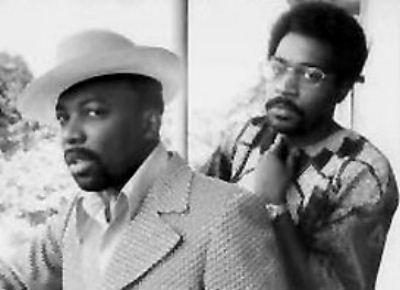
Songwriters Leon Huff and Kenneth Gamble composed tunes with political messages for chart-toppers like the O’Jays and Billy Paul.

Forty Years of Philadelphia Sound
By Jim Morrison

When Leon Huff and Kenneth Gamble would huddle to write songs, they’d each bring a long, yellow legal pad of potential titles, sometimes 200 or 300 each. Huff would sit at the upright piano in his office with a tape recorder rolling. He would start playing and Gamble would riff lyrics. “Sometimes [the songs] would take 15 minutes to write and sometimes they’d take all day,” Gamble recalls. “The best ones came in ten, fifteen minutes.”

The two first ran into each other in an elevator in Philadelphia’s Schubert Building, where they were working as songwriters on separate floors. Soon after, they met at Huff’s Camden, New Jersey home on a Saturday and wrote six or seven songs the first day. “It was an easy, easy fit,” Gamble recalls.

During the 60s, they had moderate success with hits like “Expressway to Your Heart” by the Soul Survivors, “Cowboys to Girls” by the Intruders and “Only the Strong Survive” by Jerry Butler.

But they wanted to be more than writers and producers of regional hits who occasionally made a national mark. The opportunity came 40 years ago in 1971 when Columbia Records, hoping to finally break into the black music market, gave them a $75,000 advance to record singles and another $25,000 for a small number of albums. With the money, Gamble and Huff opened their own label, Philadelphia International Records (PIR).

As they sat down to compose following the deal, the Vietnam War raged on, conflicts over desegregation spread across the country and civil war ravaged Pakistan. “We were talking about the world and why people really can’t work together. All this confusion going on in the world,” Gamble says. “So we were talking about how you need something to bring people together.”

One of the titles on a legal pad had promise: “Love Train.” Huff fingered the piano. Gamble, the words guy, began singing, “People all over the world, join hands, form a love train.”

Within 15 minutes, he recalls, they had a song for the O’Jays, a group from Canton, Ohio, that had considered calling it quits after a couple of minor chart successes. Gamble and Huff had spotted them three years earlier opening a show at Harlem’s Apollo Theater. While Eddie Levert had been singing lead for the trio, they liked the interplay between Levert and Walter Williams they saw onstage. So for the first singles on PIR, they wrote songs featuring the two trading vocals. “I knew once we put our leads on Back Stabbers it had the potential to be something special, but I didn’t know to what magnitude,” Williams says.

Read the Full Essay @ Smithsonian.com

Wednesday, June 10, 2009

Black Music Month '09: The Legacy of Jerry Butler’s Songwriter’s Workshop


BLACK MUSIC MONTH 2009

Chicago Soul Connection:
The Legacy of Jerry Butler’s Songwriters Workshop
by Mark Anthony Neal

Pop music history is filled with examples of singers who first honed their songwriting skills and offered those skills to more established acts, before making a name for themselves singing their own material. Most famously, Carole King was a staple at the famed Brill Building in New York City churning out pop confections with partner Gerry Goffin for the likes of The Shirelles, Little Eva, and Aretha Franklin, whose version of King and Goffin’s “(You Make Me Feel) Like a Natural Woman” remains a Soul standard. After a decade behind the scenes, King stepped forward in the early 1970s with Writer (1970) and then Tapestry (1971), the latter which established King as one of the definitive singer-songwriters of the era. No less a famous example can be found in the case of Nick Ashford and Valerie Simpson, who toiled at Motown for nearly a decade creating classics like “Ain’t No Mountain High Enough” and “You’re All I Need to Get By” before becoming major stars in their own right in the late 1970s and early 1980s. Contemporarily, there’s the case of Shaffer Chimere Smith, who offered his compositions to Marques Houston, Mario (“Let Me Love You”) and Christina Milian, before stepping out front as Ne-Yo. Singers need songs, and no one understood that better than the legendary song stylist Jerry Butler, when he created the Jerry Butler Songwriters Workshop in Chicago in the early 1970s. Though few remember it Butler’s workshop would have an impact on Soul music throughout the 1970s eventually figuring in the rise of Natalie Cole as the first real challenge to Aretha Franklin’s status as the “Queen of Soul”

Jerry Butler began his professional singing career in the late 1950s as the initial lead singer for The Impressions. Butler was 18-years-old when the Chicago based group topped the pop charts with “For Your Precious Love” in 1958. Among those in the group was a 16-year-old songwriter and guitarist by the name of Curtis Mayfield, later to become one of the most recognizable singer-songwriters of his generation. Though Butler was with the group for only a short time, he and Mayfield forged a productive professional relationship that led to Butler’s success recording as a solo artist in the early 1960s. Recording with with the black-owned Vee-Jay Records with the Butler/Mayfield collaboration produced hits like “Need to Belong” and “He Will Break Your Heart.”

Butler also had access to the remnants of Tin Pan Alley—the cadre of New York based songwriters and producers that were at the heart of American popular music in the early 20th century—in this case, the aforementioned Brill Building where Butler scored hits recording tracks by Brill Building residents like Hal David and Burt Bacharach (“Make It Easy On Yourself”).


When Butler signed with Mercury Records in 1966 and was again in need of strong material, he turned to two young and unproven songwriters and producers named Leon Huff and Kenny Gamble. Butler’s work with Gamble and Huff coincides with the most productive and popular period of the Soul singer’s career with a string of hits including the ballad “Never Gonna Give You Up” (later covered by Isaac Hayes on Black Moses), “Hey Western Union Man” and “Only the Strong Survive,” which became Butler’s first Gold single and gave an early inkling of the uplift music that Gamble and Huff would become known for in the 1970s. Recalling his work with Gamble and Huff, which produced the legendary The Ice Man Cometh recording, Butler writes in his autobiography Only the Strong Survive: Memoirs of a Soul Survivor,
Huff would be on the piano , while Kenny and I would come up with lyrics. Huff and Kenny would come up with concepts and play some chords, and I started singing. That’s how we came up with ‘Never Gonna Give You Up’.
When Mercury Records balked at Gamble and Huff’s efforts to get a greater percentage of the profits from their production efforts with Butler, the relationship was dissolved in late 1969, though Butler would record two albums with the duo for Philadelphia International Records a decade later. Having worked with songwriters and producers like Gamble and Huff and Curtis Mayfield before them—folk who literally defined the sound of Soul music for more than a decade—Butler’s career was at a crossroads. Butler writes in Only the Strong Survive, “
I was in a terrible dilemma. Should I risk my professional reputation recording substandard material? Or should I use what I had learned over the years to lay the groundwork for developing songwriters who would supply me—and others—with quality songs for a life time. I chose the latter.
Thus the Jerry Butler Songwriters Workshop was founded in Chicago in January of 1970. A year later, the workshop became a joint venture with the Chappell music publishing company which made an initial investment of $55,000 for the project.

The Jerry Butler Songwriters Workshop did little to revive Butler’s career—though his second Gold single “Ain’t Understanding Mellow” with Brenda Lee Eager was a product of the workshop. By 1972 though, the workshop had generated $4 million in records sales and produced about 30 chart singles recorded by the likes of The Dells, Isaac Hayes, Aretha Franklin, Oscar Brown, Jr. and Betty Everette. Despite its modest success, the real story of the Jerry Butler Songwriter’s Workshop wasn’t what it produced, but the talent that came through its doors and went on to greater success. Workshop veterans include Terry Callier, who with fellow workshop participant Larry Wade, worked on The Dells' Freedom Means (1972) recording which produced their classic “The Love We Had (Stays on My Mind)” as well as Callier’s own brilliant Cadet recordings Occasional Rain (1972) and What Color is Love? (1973)—both produced by Charles Stepney, architect of the early Earth, Wind and Fire sound. Other veterans of the workshop were Len Ron Hanks and Zane Grey who wrote L.T.D.’s breakthrough hit “(Every Time I Turn Around) Back in Love Again”(1977) and later scored their own Disco hit “Dancin’” (1978) recording as Grey and Hanks.

The most successful veterans of The Jerry Butler Songwriters Workshop were the duo of Chuck Jackson and Marvin Yancy. Jackson, the brother of the Reverend Jessie Jackson, was an art director at Playboy Magazine when he joined Butler’s workshop. Yancy, was the musical director and pianist at his father’s Chicago Church when he met Jackson at Reverend Jackson’s Black Expo in 1971. The two made a musical connection and the initial fruits of their collaboration was the formation of the group The Independents which featured Jackson, Yancy (who preferred staying in the background) Helen Curry, Maurice Jackson (no relation), and later Eric Thomas, who was a member of Reverend Jackson’s Operation PUSH Choir. Recording with dual leads Curry and Chick Jackson, in the spirit of the deep Soul recordings of the Soul Children, The Independents produced a series of soulful, moody and gospel inflected mid-tempo and ballad numbers including “Leaving Me,” which sold over a million copies in 1973, “Baby I Been Missing You,” “The First Time We Met,” “In the Valley of My World” (later sampled on Jay Z’s remix of “Allure”) and the stirring “Let This Be a Lesson to You.”


Despite the group’s moderate success, Jackson and Yancy disbanded The Independents to seek other opportunities. Jackson and Yancy’s fortunes changed when they had a chance encounter with the daughter of Nat King Cole, who was performing at a local club in Chicago. Natalie Cole had been performing a collection of pop standards and soft rock songs, contemplating signing with a major label, but wary of being "exploited" as the daughter of a pop icon. That all changed when Jackson and Yancy took Cole into Curtis Mayfield’s Chicago studio and recorded the demo for what became “Inseparable.” As Cole told The New York Times Stephen Holden in 1976, “I went back to R&B with my producers who gave it a little extra sophistication.” That sophistication translated into Cole’s first album Inseparable (1975), recorded for her father’s longtime label Capitol. The album eventually spawned two chart-topping singles—the title track and “This Will Be”—and earned Cole two Grammy Awards in 1975 including the award for “Best R&B Performance, Female”—the first person not named Aretha Franklin to win that category in 8 years.

A year after the release of Inseparable, mainstream newspapers like The New York Times were publishing articles openly asking if Natalie Cole was the “new queen of Soul?” (November 21, 1976). If Cole seemed to have an affinity for Franklin’s style, it wasn’t an accident. Jackson and Yancy’s “You” was recorded by both Franklin and Cole in 1975 (it was the title track of Franklin’s 1975 album) and “This Will Be” was initially offered to Franklin. With musical taste changing, Jackson and Yancy (who was briefly married to Cole in the late 1970s) were able to package Cole with a pop-jazz sound, not unlike that of Cole’s father and Jerry Butler in the early 1960s, but with the Gospel sensibility that Jackson and Yancy were most familiar with. Cole alludes to this dynamic telling Leonard Feather in a 1976 Los Angeles Times piece, about her practices of overdubbing her own background vocals instead of using backup singers:
I imagine two group; I call the N sisters and the Colettes…the Colettes—they’re a commercial kind of group—and I’ve given them names like Jody, Betty and Suzie. But the Ns are gospel singers.
The Cole, Yancy, Jackson collaboration would produce five albums and several million-selling singles including 1977’s “I’ve Got Love on My Mind” (from Thankful) and “Our Love” which was released later in the year on Unpredictable. At her peak in the 1970s, Cole music was the very definition of crossover pop music, though it was always steeped in the Gospel aesthetic that Aretha Franklin helped mainstream a decade earlier. As Cole told Feather,
I really didn’t think I could sing all that good until I began working with [Chuck and Marvin], but they can communicate to me exactly what feeling they think is right for a particular song.
No doubt Jackson and Yancy’s time at The Jerry Butler Songwriters Workshop, contributed to them becoming better songwriters, but also helped them become much more adept at managing talent in the studio—something that is increasingly a lost art.

After the dissipation of her professional relationship with Jackson and Yancy and eventual divorce from Yancy (who was an emerging Gospel star when he died in 1985 at age of 35), Cole went through her well documented struggles with addiction, only to reemerge in 1991 as a major pop star by literally embracing her father’s musical legacy winning three Grammy Awards for Unforgettable…with Love (1991).

For Butler’s part, he was always clear about his investment in the songwriters workshop. As he told Rolling Stone magazine in 1973,
The idea for the workshop came out of self-interest. I had obligations to do thirty sides for Mercury…Tin Pan Alley, where you used to be able to go get a couple of songs, has died for all intents and purposes.” Butler added, “I knew Chicago was not the music center that it once was. But at the time, I knew there were a number of young cats in Chicago with a lot of songwriting talent, who just didn’t have any place to take it to. And even more important, nobody to encourage them. (quoted in Robert Pruter’s Chicago Soul).
Butler’s comments are just a reminder that great artists need great material and as the popular recording industry has become more producer driven and given to star-gazing, the industry is far more interested in discovering the next Aretha Franklin or Beyonce, than the next Carole King or Chuck Jackson and Marvin Yancy.

***

Mark Anthony Neal is the author of several books including What the Music Said: Black Popular Music and Black Public Culture (1999) and Songs in the Key of Black Life: A Rhythm and Blues Nation (2003). A frequent contributor to The Root.com (Washington Post/Newsweek Interactive), Neal maintains a blog at http://newblackman.blogspot.com. He is currently completing Looking for Leroy: (Il)Legible Black Masculinities for NYU Press.

Bookmark and Share