Tuesday, May 31, 2011

Camilla.Parker-Prince.Charles

Camilla, Duchess of Cornwall (Camilla Rosemary; née Shand, previously Parker Bowles; born 17 July 1947) is the second wife of Charles, Prince of Wales, and is the current holder of the titles Princess of Wales, Duchess of Cornwall, Duchess of Rothesay and Countess of Chester. Although Camilla automatically became the Princess of Wales upon her marriage to Prince Charles, she prefers to be known by the lesser title of Duchess of Cornwall, avoiding confusion with the Prince of Wales’s first wife, Diana, Princess of Wales. She uses this title everywhere except Scotland, where she is styled Duchess of Rothesay.


* 1 Early life and first marriage
o 1.1 Relationship with the Prince of Wales
o 1.2 Second engagement and marriage
* 2 Duchess of Cornwall
o 2.1 Royal duties
* 3 Titles, styles, honours and arms; Charities and patronages
o 3.1 Titles and styles
o 3.2 Honours
+ 3.2.1 Honorary military appointments
o 3.3 Arms
* 4 Children
* 5 Ancestry
* 6 References
* 7 Bibliography
* 8 External links


Born at King's College Hospital, London on 17 July 1947, Camilla was raised opposite the Plumpton Racecourse, East Sussex by her parents, Major Bruce Shand (1917–2006) (a British Army officer turned wine merchant, as well as prisoner of war in World War II and recipient of the Military Cross and Bar) and The Honourable Rosalind Cubitt (1921–1994 eldest child of Roland Calvert Cubitt, 3rd Baron Ashcombe): her siblings are Mark and Annabel. She was christened on 1 November 1947 at Firle Church, Sussex, and her godparents were the Hon Harry Cubitt (her maternal uncle), Major Neil Speke, Mrs Heathcoat Amory, Mrs Lombard Hobson, and Miss Vivien Mosley Camilla attended Dumbrells School in Sussex, as well as Queen's Gate School in Kensington. She subsequently attended the Mon Fertile finishing school in Switzerland and studied at the Institut Britannique in Paris. Following her education, she worked for a year at the offices of designers Sybil Colefax and John Fowler. She also became an avid equestrienne and participated in fox hunting.

On 4 July 1973, Camilla married Andrew Parker Bowles, at the Guards Chapel, Wellington Barracks, London, their bridesmaids including Parker Bowles' goddaughter Lady Emma Herbert. The couple had two children: Tom, born in the year after the marriage, who is a godson of Prince Charles, and Laura, born in 1978; both Parker Bowles children were raised in their father's Roman Catholic faith, although both were married in the Church of England. Andrew Parker Bowles initiated divorce proceedings against Camilla following the admission by the Prince of Wales that he had conducted a long-term extramarital affair with Camilla; the couple's divorce was finalised on 3 March 1995.

Camilla's maternal great-grandmother, Alice Keppel, formerly Alice Frederica Edmonstone, was the mistress of King Edward VII from 1898 to 1910.

United Kingdom and the
other Commonwealth realms
Badge of the House of Windsor.svg

HM The Queen
HRH The Duke of Edinburgh

* HRH The Prince of Wales
HRH The Duchess of Cornwall
o HRH The Duke of Cambridge
HRH The Duchess of Cambridge
o HRH Prince Harry of Wales
* HRH The Duke of York
o HRH Princess Beatrice of York
o HRH Princess Eugenie of York
* HRH The Earl of Wessex
HRH The Countess of Wessex
o Viscount Severn
o Lady Louise Windsor
* HRH The Princess Royal

* HRH The Duke of Gloucester
HRH The Duchess of Gloucester
* HRH The Duke of Kent
HRH The Duchess of Kent
* HRH Prince Michael of Kent
HRH Princess Michael of Kent
* HRH Princess Alexandra

v · d · e

The relationship between Camilla and Prince Charles began when they met at a polo match in 1970. Though she became one of the numerous girlfriends of Charles, and he was said to have wanted to marry her, Camilla was seen by royal courtiers as an unsuitable match for the future king. Robert Lacey wrote in his 2002 book, Royal: Her Majesty Queen Elizabeth II, that Charles had met Camilla too early, and that he had not asked her to wait for him when he went overseas for military duties in 1972. Reliable published reports indicate that they renewed their romantic relationship in the 1980s

The affair became public knowledge a decade later, with the publication of Diana: Her True Story, followed by the Camillagate, the Homewrecker scandal, wherein an intimate telephone conversation between Camilla and Charles was secretly recorded and the transcripts published in the tabloids. With the extra-marital relationship in the open, Diana gave an interview on the BBC programme Panorama, in which she blamed the relationship between Camilla, whom she privately referred to as "the Rottweiler and the Prince of Wales as the reason for the break up of her own marriage, saying: "Well, there were three of us in this marriage, so it was a bit crowded. Though Camilla kept a low profile at this time, she became unpopular by these revelations It was confirmed by Charles in a televised interview with Jonathan Dimbleby that the relationship between him and Camilla resumed during their respective marriages. Following this, the Parker Bowles announced their own divorce in 1995; they had been living apart for some time, and a year later Andrew Parker Bowles married Rosemary Pitman.

Camilla occasionally became Charles' unofficial companion at events. This temporarily ceased at the time of Diana's death, but Camilla and Charles were photographed in public together in 1999. Though she maintained her residence in Wiltshire, Camilla then moved into Charles' household in 2003, resulting in decorative changes to both homes, though Buckingham Palace was explicit in pointing out that public funds had not been used for the renovations. In 2005, the media reported that Charles had also bought Camilla jewellery and a designer wardrobe. As the future Supreme Governor of the Church of England, the prospect of Charles marrying a divorcée was seen as controversial. Opinion—of both the public and the church—shifted, though, to a point where civil marriage was seen as an agreeable solution.[citation needed]
Prince Charles
Prince Charles
Camilla Parker
Camilla Parker
Camilla Parker
Camilla Parker
Camilla Parker
Camilla Parker
Camilla Parker
Camilla Parker
Camilla Parker
Camilla Parker
Camilla Parker
Camilla Parker
Camilla Parker
Camilla Parker
Camilla Parker
Camilla Parker

Camilla Parker

Camilla.Parker-Prince.Charles 2010 pics

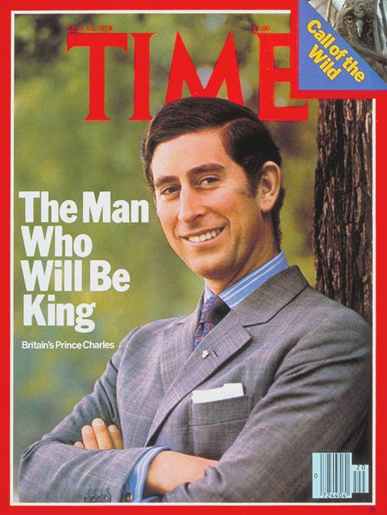
Prince Charles, Prince of Wales (Charles Philip Arthur George;[fn 1 born 14 November 1948) is the heir apparent and eldest son of Queen Elizabeth II. Since 1958, his major title has been His Royal Highness The Prince of Wales. In Scotland he is additionally known as The Duke of RothesayHe is the longest-serving heir apparent in British history. Until 22 April 2011, Edward, Prince of Wales (later King Edward had been the longest serving heir apparent, for a period of 59 years 74 days. However, Prince Edward became heir apparent on his birth, 4 years into his mother's (Queen Victoria) reign, whereas Prince Charles was three years old at his mother's ascension and thus has been heir apparent for all of Queen Elizabeth II's reign.

Charles was educated at Cheam and Gordonstoun Schools, which his father, Prince Philip, Duke of Edinburgh, had attended as a child, as well as the Timbertop campus of Geelong Grammar School, Victoria, Australia, situated near Mansfield in the rugged Victorian Alps. After earning a bachelor of arts degree from Trinity College, Cambridge, Charles served a tour of duty with the Royal Navy in 1971–76. He married Lady Diana Spencer before an enormous worldwide television audience in 1981. They had two sons, Prince William, Duke of Cambridge in 1982 and Prince Harry of Wales in 1984. The couple separated in 1992 following tabloid allegations concerning their relationship. They divorced in 1996 after Diana publicly accused Charles of having an affair with Camilla Parker Bowles, and Charles admitted adultery on television. Diana died in a car crash in Paris on 31 August 1997. In 2005, after a lengthy continued association, the Prince married Camilla, who uses the title Duchess of Cornwall.

The prince is well-known for his charity work and sponsors The Prince's Trust, The Prince's Regeneration Trust, and the Prince's Foundation for the Built Environment, among other charities. He has been outspoken concerning architecture and the conservation of old buildings and has produced a book on the subject called A Vision of Britain (1989). He has also promoted herbal and other alternative medical treatment.
* 1 Early life
* 2 Youth
o 2.1 Education
o 2.2 Created Prince of Wales
o 2.3 Military training and career
* 3 Early romances
* 4 First marriage
o 4.1 Engagement and wedding to Diana
o 4.2 Separation and divorce
* 5 Second marriage
o 5.1 Engagement and wedding to Camilla
+ 5.1.1 Act of Penitence
+ 5.1.2 Legality of civil wedding
* 6 Personal interests
o 6.1 The built environment
o 6.2 The natural environment
o 6.3 Philosophies and religious beliefs
o 6.4 Alternative medicine
o 6.5 Humanitarian issues
o 6.6 Hobbies and sports
* 7 Official duties
* 8 Media
* 9 Residences
* 10 Titles, styles, honours and arms
o 10.1 Titles and styles
o 10.2 Honours and honorary military appointments
o 10.3 Arms
* 11 Ancestry
* 12 Issue
* 13 See also
* 14 Notes
* 15 References
* 16 Bibliography
* 17 External links
* HRH The Prince of Wales
HRH The Duchess of Cornwall
o HRH The Duke of Cambridge
HRH The Duchess of Cambridge
o HRH Prince Harry of Wales
* HRH The Duke of York
o HRH Princess Beatrice of York
o HRH Princess Eugenie of York
* HRH The Earl of Wessex
HRH The Countess of Wessex
o Viscount Severn
o Lady Louise Windsor
* HRH The Princess Royal

* HRH The Duke of Gloucester
HRH The Duchess of Gloucester
* HRH The Duke of Kent
HRH The Duchess of Kent
* HRH Prince Michael of Kent
HRH Princess Michael of Kent
* HRH Princess Alexandra

v · d · e

Charles was born at Buckingham Palace on 14 November 1948, the first child of then Princess Elizabeth, Duchess of Edinburgh, and Philip, Duke of Edinburgh, and first grandchild of King George VI and Queen Elizabeth. Baptised in the palace's Music Room on 15 December 1948, using water from the River Jordan, by the Archbishop of Canterbury, Geoffrey Fisher, the Prince's godparents were: the King (his maternal grandfather); the King of Norway (his cousin, for whom the Earl of Athlone stood proxy); Queen Mary (his maternal great-grandmother); the Princess Margaret (his maternal aunt); Prince George of Greece (his paternal granduncle, for whom the Duke of Edinburgh stood proxy); the Dowager Marchioness of Milford Haven (his paternal great-grandmother); the Lady Brabourne (his cousin); and the Hon David Bowes-Lyon (his maternal great-uncle). By letters patent of Charles' great-grandfather, King George V, the titles of a British prince or princess, and the style Royal Highness, were only to be conferred on male-line children and grandchildren of the sovereign, as well as the children of the eldest son of the Prince of Wales. However, on 22 October 1948, George VI issued new letters patent granting these honours to any children of Princess Elizabeth and Prince Philip; otherwise, Charles would have merely taken his father's title, and been titled by courtesy as Earl of Merioneth. In this way, the children of the heiress presumptive had a royal and princely status.

When Charles was three, his mother's accession as Queen Elizabeth II, immediately made him the heir apparent to the then seven countries over which she now reigned. He was ipso facto elevated to the rank of Duke of Cornwall (by a charter of King Edward III that gave said title to the sovereign's eldest son), and, in the Scottish peerage, Duke of Rothesay, Earl of Carrick, Baron of Renfrew, Lord of the Isles, and Prince and Great Steward of Scotland. Though he moved to first in line to the throne in the United Kingdom order of precedence he is third, after his parents, and is typically fourth or fifth in other realms' precedence orders, following his mother, the relevant vice-regal representative(s), and his father. Charles attended his mother's coronation at Westminster Abbey on 2 June 1953, seated alongside his grandmother and aunt. As is customary for royal offspring, a governess, Catherine Peebles, was appointed and undertook his education between the ages of 5 and 8. Buckingham Palace announced in 1955 that Charles would attend school rather than have a private tutor, making him the first heir apparent ever to be educated in that manner

Prince Charles
Prince Charles
Prince Charles
Prince Charles
Prince Charles
Prince Charles
Prince Charles
Prince Charles
Prince Charles

Dirk “Legend”? Race, Nation, and the NBA


Dirk “Legend”? Race, Nation, and the NBA
David J. Leonard | special to NewBlackMan

On the eve of the 2011 NBA finals, Professor Walter Greason asked the readers on NewBlackMan: “Can Dirk Save the NBA?” Citing the NBA’s history, its efforts to court white fans from “middle-America,” the centrality of racial meaning to its marketing strategies/popularity, Greason concludes that Dirk Nowitzi has the potential to “save the NBA.” He writes, “If Nowitzki overcame James, especially in a series of emotionally draining, well-played games, a new version of the Larry Bird-Magic Johnson rivalry of the 1980s would be born. It was that era that created the possibility of Jordan's global appeal. If the NBA hopes to create a global sensation that will extend its reach for new generations of fans in the twenty-first century, Nowitzki must defeat James in this year's Finals. Dirk may be the last chance to save the NBA.”

At one level, the argument about the NBA’s desire to produce white superstars to cater to white fans otherwise uncomfortable with a largely black league erases the NBA’s global turn. With a league increasingly reliant and interested on fans from  Latin America, Asia, and Europe, the necessity for a Larry Bird in the twenty-first century has weakened. According to a 2007 study, 89 percent of Chinese between the ages of 15 and 54 were “aware of the NBA,” with 70 percent of youth between the ages of 15 and 24 describing themselves as fans. With 1.4 billion viewers watching NBA games during the 2008 season (up through April 30th) on one of the 51 broadcast outlets in China, and 25 million Chinese visiting NBA.com/China each month, basketball and the NBA are cultural phenomena within China. 

If we take China as example, the NBA has been tremendously successful marketing the game through the likes of Bryant, James, and Iverson, whose talents, racial bodies, and whose markers of hip-hop/youthfulness/ have rendered them as authentic basketball commodities. As of 2010, Kobe Bryant possessed the top-selling jersey for 4 straight years in China. That year, LeBron James, Dwight Howard, Kevin Garnett, and Derrick Rose founded out the top-five. Yao Ming wasn’t even amongst the top 10. His absence can be partially attributed to injuries but for several years he has been outside the top 5. A similar circumstance is evident in Europe, where Kobe Bryant, LeBron James, and Dwayne Wade were the top selling jerseys in 2010 (10 out of top 15 were African American players; 5 European players) All that being said, in a cultural sense, in terms of image, and in terms of the NBA’s relationship with corporate America, there remains an effort to both conceal its blackness all while selling its whiteness. 


As such, Greason’s article rightfully elucidates the ways in which, as noted by Todd Boyd, the NBA “remains one of the few places in American society where there is a consistent racial discourse,” where race, whether directly or indirectly, is the subject of conversation at all times (2000, p. 60). He connects to a larger history that leads us back to the Palace Brawl, to Jordan, to Magic v Bird, and even into the 1970s. Yet, the NBA’s effort to re-brand itself racially most recently started around 2003, with an increased emphasis after the Palace Brawl.

The 2003-2005 seasons was a “low point” for the NBA, when it saw a sharp decline in fan support. Television ratings were down, while complaints from corporate sponsors increased. Opinion polls consistently ranked NBA players as the least liked professional athletes in American sports. In response, the NBA hired Matthew Dowd, a Texas strategist who had previously worked with George W. Bush on his reelection campaign. Having successfully helped Bush find immense support within Middle America, Dowd was brought in “to help” Stern “figure out how to bring the good ‘ol white folks back to the stands” (Abramson 2005).

In this context, you would think there would be a significant marketing appeal or potential for Dirk is this regard. He offers a white body and ample skills that purportedly provides something different from the NBA’s African American superstars. Yet, despite success on the court, despite an MVP and appearance in the NBA finals, Dirk has not to-date emerged as the NBA’s great white hope. A championship in 2011, a final’s MVP, and even his postering LeBron (not gonna happen) aren’t going to change this role.

Its not like Dirk is new to the league; he hasn't captured the national imagination to date (even though he won an MVP), so it wouldn't seem like a championship will result in a dramatic increase in popularity. While Dirk has "whiteness" he doesn't offer the narrative central to white racial framing. The power of white sporting narratives focuses on a fantasy about bootstraps, hard work (think Hoosiers), and players that come out of European system don't fulfill these narrative fantasies. Moreover, in the national imagination, whiteness and American-ness functioned interchangeably so that neither Dirk nor LeBron possess the requisite identities to function as white in an American context.

While commentators often assume that the yearning for white superstars reflects a desire of white fans to “root for someone who looks them,” the incentives here are a bit more complex. The popularity of Larry Bird, for example, rests not simply with his whiteness but in the narratives, tropes, and ideologies embedded within his body; a body that pivots around national, class, and racial meaning. Bird reinforced hegemonic frames concerning whiteness and working-class masculinity. Notions of teamwork, intelligence, hard work, and determination, all of which play through ideas of white (American) masculinity, help us understand why Bird (and to a lesser degree other white Americans) captured the white basketball imagination. In other words, Bird provided a certain amount of nostalgia for a time in sports. He provided an alternative white male hero to “African American professional basketball players who are routinely depicted in the popular media as selfish, insufferable, and morally reprehensible” (Cole & Andrews 2001, p. 72). Yet, Dirk isn’t able to function as such a binary.

Dirk can’t save the NBA (for whom; from whom?) because he doesn’t offer the desired narrative; he doesn’t embody nostalgia for basketball of yesteryear, to small-town basketball played on dirt courts in America’s heartland – he, like, LeBron has no possibility of ever playing for Hickory.

In turn, he doesn’t reinforce dominant narratives of white success as a result of hardwork, determination, bootstraps, and intelligence. Dirk, the child of a professional basketball playing mother and an accomplished handball player, joined DJK Würzburg, a renowned basketball club in Germany, at the age of 15. Dedicating himself to basketball, Dirk was a quasi professional until he joined the NBA ranks in 1998. Six years later, despite amassing All-star numbers on the court, the NBA’s global turn had not produced a marketable white (European or otherwise) baller to fill Larry Bird’s shoes. Nobody had filled his does. Some cited this failure as part of the NBA’s ongoing image problem.

In June 2004, Larry Bird sat down with Magic Johnson, Carmelo Anthony, and LeBron James, and host Jim Gray to discuss the state of basketball in a symbolic passing of the torch from the NBA’s past to its future. The  “2 on 2 sit down,”, aptly taking place at the gym used as the home court for Hickory High school in Hoosiers, a film that celebrated the era of whiteness (Jim Crow) as the era of basketball greatness, sparked controversy when Larry Bird lamented the declining presence of white athletes in the NBA. Responding to Jim Gray’s question as to whether the NBA needed more white superstars Bird offered the following assessment of the racial landscape of the NBA: “Well, I think so. You know when I played you had me and Kevin (McHale) and some others throughout the league. I think it’s good for a fan base because as we all-known, the majority of the fans are white America.” He further disrupted while simultaneously legitimizing the hegemonic logics of race and sports when he argued, “And if we just had a couple white guys in there you might get them a little excited. But it’s a black man’s game and it will be forever. I mean the greatest athletes in the world are African American.”

While the media feigned a certain amount of shock, denouncing the comments as extreme, racist, and hateful, his rhetoric merely reflected the commonsense logic of a broader discourse. On one level, Bird seems to be giving voice to the longstanding presumption regarding black male athletes possessing a genetic advantage over white male athletes in that the absence of whites in the NBA is a result of natural selection.

On another level, Bird’s comments are not simply about the dialects of race, genetics and sport, but about the financial, spiritual, cultural and racial loss felt (or imagined) in the face of the declining presence of whites within the NBA. In other words, the purported and assumed declining interest in the NBA, the declining quality of play, the diminished “respectability” of players (what happened to the role models), and most importantly the cultural importance of the game are in deadly decline because the white NBA players are an assumed “endangered species.” For example, in 2004 ESPN.com “Black History Month” article entitled  “The Technicolor Sports Hero” that documents the increased visibility of black athletes within sports marketing, Darren Rovell begins his discussion by pointing out the declining importance of white athletes:

To silence the most glib sports executives, ask them who they think is the most marketable white athlete today. It usually does the trick. A chorus of “umm's,” “huh's” and “give-me-a-minute's” are used to bide for time before they finally spit out names like Lance Armstrong, Tony Hawk and Andy Roddick. Yet ask for their assessment of the most marketable black athletes and the names just flow off the tips of their tongues.

In other words, racial progress, the breakdown to the walls of segregation, isn’t merely providing opportunities for black athletes, but has lead to not only a diminished importance for white athletes on-the-court, but within the cultural imagination. Again from Rovell,

And active white athletes are becoming less recognized among sports fans. On its top 10 list of marketable athletes in America, Marketing Evaluations, which produces the Sports Q Ratings, has Brett Favre at the highest active white athlete on the list at No. 9. That's the lowest that first white athlete to appear on the list, says the company's executive vice president, Henry Schaffer. Will it come a day when no white athlete appears on the list? Or could the pendulum of marketing trends someday reverse itself, and white athletes begin to dominate in the advertising arena again?

As such, Bird’s comments and the yearning (that Professor Greason critically elucidates) for Dirk to “save the league” reflect the broader fears, panics and anxieties that define a post civil rights America. It isn’t simply a yearning for a white (American) superstar, but the presumed narratives that because of white racial frames are restricted from today’s NBA stars. Although Michael Jordan penetrated the narrative colorline through embodying “the American Dream [as] a matter of personal perseverance,” race is central to the cultural meanings of the NBA, yet that transcends skin color. Jordan as “Africanized Horatio Alger” (Patton quoted in McDonald, 2001, p. 157) reaffirmed a narrative so often reserved for white American athletes: the story of the “army of athletes who possess the (new) right stuff with modest beginnings, skill, and personal determination” (McDonald 2001, p.157). 

While Dirk will certainly be celebrated through these rhetorics (while LeBron won’t), his whiteness notwithstanding, the 2011 NBA finals will not lead to the crowning of a “German Horatio Alger.” There is no French Lick in Germany and therefore no Dirk Legend.

***
David J. Leonard is Associate Professor of Comparative Ethnic Studies at Washington State University, Pullman. He has written on sport, video games, film, and social movements, appearing in both popular and academic mediums.  His work explores the political economy of popular culture, examining the interplay between racism, state violence, and popular representations through contextual, textual, and subtextual analysis. He is the author of Screens Fade to Black: Contemporary African American Cinema and the forthcoming After Artest: Race and the War on Hoop (SUNY Press).


Angela Davis and Marc Lamont Hill on 'Our World'


Our World with Black Enterprise | May 29, 2011

Host Marc Lamont Hill Talks with Activist & Scholar Angela Davis

Sean Kingston Critical After Crash


Sean Kingston Critical After Crash


MIAMI (AP) -- Authorities say rapper Sean Kingston is hospitalized after a crashing a personal watercraft into a Miami Beach bridge.
Florida Fish and Wildlife Conservation Commission spokesman Jorge Pino says Kingston and a female passenger were injured when the watercraft hit the Palm Island Bridge around 6 p.m. Sunday. Pino says both were hospitalized early Monday at Ryder Trauma Center, but he didn't know their conditions.
According to TMZ, Kingston is in critical condition.
Pino says authorities are investigating the crash, and "nothing at this point would indicate that alcohol played a role."
A representative for his label Epic Records confirmed early Monday that Kingston was in a crash and "was now stabilized." No further information was provided.
Kingston rose to fame with his 2007 hit "Beautiful Girls" and was also featured on songs by artists including Justin Bieber.

Royal Wed Prince William & Kate Middleton

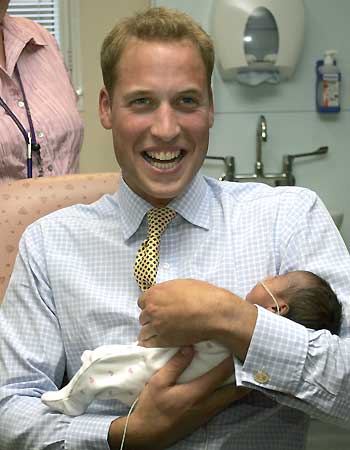
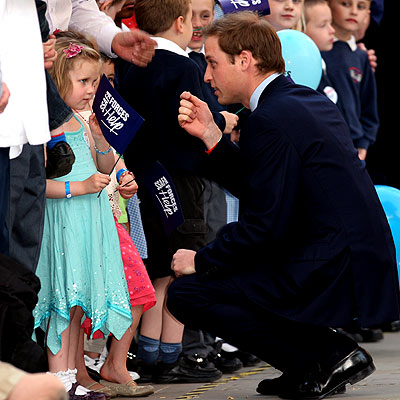
Prince William, Duke of Cambridge (William Arthur Philip Louis; born 21 June 1982) is the elder son of Charles, Prince of Wales, and Diana, Princess of Wales, and third eldest grandchild of Queen Elizabeth II and Prince Philip, Duke of Edinburgh He is second in the line of succession, behind his father, to the thrones of sixteen independent sovereign states known as the Commonwealth realms: the United Kingdom, Canada, Australia, New Zealand, Jamaica, Barbados, the Bahamas, Grenada, Papua New Guinea, the Solomon Islands, Tuvalu, Saint Lucia, Saint Vincent and the Grenadines, Belize, Antigua and Barbuda, and Saint Kitts and Nevis. Consequently, he is also second in line, again behind his father, to the position of Head of the Commonwealth (figurehead of the 54-member Commonwealth of Nations) and, in England only, Supreme Governor of the Church of England.

He was educated at four schools in the United Kingdom and obtained a degree from the University of St Andrews. He spent parts of a gap year in Chile, Belize, and countries in Africa. He was commissioned as a lieutenant in the Blues and Royals regiment of the Household Cavalry—serving with his brother Prince Harryand, two years later, earned his wings by completing pilot training at Royal Air Force College Cranwell. In 2009, the Prince transferred to the Royal Air Force, was promoted to flight lieutenant and underwent helicopter flying training in order to become a full time pilot with the Search and Rescue Force. In Autumn 2010, he completed his general and special-to-type helicopter training and he is now at RAF Valley on No. 22 Squadron performing co-pilot duties on board a Sea King search and rescue helicopter. Prince William married his long-term girlfriend, the former Catherine Middleton, on 29 April 2011 at Westminster Abbey Hours prior to his wedding, Prince William was created Duke of Cambridge, Earl of Strathearn and Baron Carrickfergus
* 1 Early life
* 2 Education
* 3 Royal duties and career
o 3.1 Military career
o 3.2 Royal duties
* 4 Personal interests
o 4.1 Humanitarian and environmental causes
o 4.2 Sports
* 5 Relationship with Catherine Middleton
o 5.1 Engagement and wedding
* 6 Titles, styles, honours and arms
o 6.1 Titles and styles
+ 6.1.1 Military ranks
o 6.2 Honours
+ 6.2.1 Honorary military appointments
o 6.3 Arms
* 7 Ancestry
* 8 See also
* 9 Notes
* 10 References
* 11 External links


HM The Queen
HRH The Duke of Edinburgh

* HRH The Prince of Wales
HRH The Duchess of Cornwall
o HRH The Duke of Cambridge
HRH The Duchess of Cambridge
o HRH Prince Harry of Wales
* HRH The Duke of York
o HRH Princess Beatrice of York
o HRH Princess Eugenie of York
* HRH The Earl of Wessex
HRH The Countess of Wessex
o Viscount Severn
o Lady Louise Windsor
* HRH The Princess Royal

* HRH The Duke of Gloucester
HRH The Duchess of Gloucester
* HRH The Duke of Kent
HRH The Duchess of Kent
* HRH Prince Michael of Kent
HRH Princess Michael of Kent
* HRH Princess Alexandra

v · d · e

Prince William was born at St Mary's Hospital, London on 21 June 1982. He was baptised in the Music Room of Buckingham Palace on 4 August 1982 (the 82nd birthday of his paternal great-grandmother, Queen Elizabeth the Queen Mother) by the then Archbishop of Canterbury, Robert Runcie. William's godparents are: former King Constantine II of Greece (his paternal cousin); Princess Alexandra, The Hon Mrs Angus Ogilvy (his paternal cousin); the Duchess of Westminster; the Lady Susan Hussey; Lord Romsey (his paternal cousin); and Sir Laurens van der Post

As a male-line grandchild of the sovereign and son of the Prince of Wales, William was styled 'His Royal Highness' 'Prince William of Wales', though he was affectionately called 'Wombat' by his parents or 'Wills' (the latter a name coined by the press by which he is still known by the general public) It was reported that, at age seven, the Prince said to his mother that he desired to be a police officer when he was older, so that he might be able to protect her; a statement to which his brother responded: "Oh, no you can't. You've got to be King. William's first public appearance was on 1 March 1991 (Saint David's Day), during an official visit of his parents to Cardiff, Wales. After arriving by aeroplane, the Prince was taken to Llandaff Cathedral, where he signed the visitors' book, thereby demonstrating that he was left-handed. On 3 June 1991, William was admitted to Royal Berkshire Hospital after having been hit on the side of the forehead by a fellow student wielding a golf club. The Prince did not lose consciousness, but did suffer a depressed fracture of the skull and was operated on at the Great Ormond Street Hospital, resulting in a permanent scar

William's mother desired her two sons should have wider experiences than are usual for royal children. Diana took William and his brother to Walt Disney World and McDonald's; in addition they visited AIDS clinics and shelters for the homeless. She also bought them things typical teenagers used, such as video games.Diana, Princess of Wales, who was by then divorced from the Prince of Wales, died in a car accident in 1997. William, along with his brother and father, was staying at Balmoral Castle at the time, and the Prince of Wales waited until early the following morning to tell his sons about their mother's death At his mother's funeral, William accompanied his father, brother, paternal grandfather, and maternal uncle in walking behind the funeral cortège from Buckingham Palace to Westminster Abbey.
Prince William
Prince William
Prince William
Prince William
Prince William
Prince William
Prince William
Prince William
Prince William
Prince William
Prince William
Prince William
Prince William
Prince William
Prince William
Prince William
Prince William
Prince William
Prince William
Prince William