This info comes courtesy of Trica Rose
***
The Color of Disaster:
Race, Class and Hurricane Katrina
A Symposium and Fundraiser
October 14th and 15th at NYU
Friday, October 14, 8pm
Eisner and Lubin Auditorium, Kimmel Center
60 Washington Square South
The Eye of the Storm:
Voices and Visions of New Orleans
Brenda Marie Osbey, Poet Laureate of Louisiana
Frank Stewart, Photographer, Jazz @ Lincoln Center
Deb Willis, Tisch School of the Arts, NYU
Hosted by:
Tricia Rose, American Studies, UC Santa Cruz
Robin Kelley, Anthropology, Columbia University
Saturday, October 15, 2pm - doors open
Loewe Theater
35 West 4th Street
2:30pm
Eyewitnessing the Storm:
Stories of Catastrophe and Survival
Moderator: Tricia Rose, American Studies, UC Santa Cruz
Tony Zumbado, NBC Photojournalist
Michaela Harrison, artist and New Orleans resident
4:30pm
Before and After Katrina:
History, Race and Space in New Orleans
Moderator: Lisa Duggan, American Studies, NYU
Adam Green, American Studies, NYU
Walter Johnson, American Studies, NYU
George Lipsitz, African American Studies, UC Santa Barbara
Brenda Marie Osbey, Poet Laureate of Louisiana
7:00pm
Weathering Katrina:
Community and Culture
Moderator: Robin Kelley, Anthropology, Columbia University
Mindy Fullilove, School of Public Health, Columbia University
Mandy Carter, Executive Director, Southerners on New Ground (SONG)
Charlton McIlwain, Department of Culture and Communication, Steinhardt School of Education, NYU
Eric Tang, community organizer, American Studies, NYU
9:00pm
Performance by Mother Tongue
All Events Are Free and Open to the Public. All monetary donations gratefully accepted for the Peoples Hurricane Relief Fund, a project of Community Labor United, New Orleans.
Sponsored by:
New York University's
Office of the Dean, Center for Art and Public Policy, Tisch School of the Arts
Steinhardt School of Education
Humanities Council
Office of the Provost
Dean of the Faculty of Arts and Sciences
Dean for the Humanities
American Studies Program,
Center for the Study of Gender and Sexuality,
Department of Social and Cultural Analysis
GSOC/UAW Local 2110, the Union for Graduate Assistants
UCATS/AFT Local 3882, the Union for Clerical and Technical Staff
ACT-UAW Local 7902, the Union for Adjunct and Part-Time Faculty
Sunday, October 9, 2005

Friday, September 30, 2005
Back from the World: On Activism and Social Utility
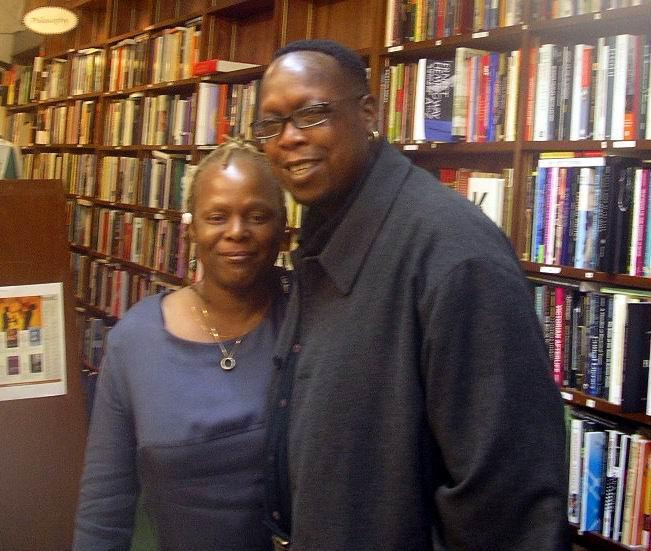
Just back from three day sojourn through central and western New York—specifically Albany, Buffalo and Fredonia, all places that critical to my intellectual development at various points of my career. I earned a BA and MA in English from SUNY-Fredonia, my doctorate from the University of Buffalo and taught for six years at SUNY-Albany. The Book House at Stuyvesant hosted a joint signing with myself and Janell Hobson and the English Department at SUNY-Fredonia hosted a lecture and signing for me as part of the college’s homecoming activities.
The highlight of my trip though was conversation between myself and Masani Alexis DeVeaux that was hosted by Talking Leaves Books in Buffalo. Talking Leaves is one of my favorite book spots in the world. Founded in the midst of the heady political times of the early 1970s, it remains a bastion of sophisticated left sensibilities as well as a shining example of a business committed to social justice and community involvement. Still remember picking up my copy of Tricia Rose’s Black Noise at Talking Leaves—literally grabbing my copy as they opened the shipment (my colleague and friend Greg Dimitriadis picked up the other copy that day back in 1994).
Of course, Alexis and I have a history—much of it lovingly recalled throughout the pages of New Black Man. Though we could have “performed” as Mama Soul and Soul Baby (the metaphor for our intellectual relationship) Alexis (who attended the Saturday march in DC) thought it would be better to use our conversation to discuss political realities in the post 9/11, post-Katrina world. What occurred was a great conversation about pedagogical strategies, the generational divide among The Left and the need for a new language of social justice—a language more in sync with “generation ipod” and finally wrested from the grips of the Old Left.
One particularly interesting moment during our conversation about language was a discussion of the word “activism”. In her former role as Chair of Women’s Studies at the University of Buffalo, Alexis mention that she often had to defend to administration the department’s desire to maintain small class sizes. Her simple response to them was that the classes needed to be small because the students were, in part, being trained to become activists. Activists? And as you would expect from any university administrator, in their minds, activism was equated with “Take Back the Night” events, locking administrators in their offices or students taking over the President’s office. Fair enough—and don’t think that their aren’t a large amount of students on our campuses who think of activists and activism in the same light, hence their desire to distance themselves from any thing that even hints at an act of activism.
But Alexis made the point the activism should begin with equipping our students (and the folk) with the skills to critically access their relationship to power and to that which actively disempowers and marginalizes them. I’ve been thinking about this definition as I introduce the students in my “Introduction to African-American Studies” class to the activist example that was Ella Jo Baker (Courtesy of Barbara Ransby’s Ella Baker and the Black Freedom Movement : A Radical Democratic Vision ). Many of my students see activism as something that belonged to the “1960s” and thus out of place with their contemporary lives. Like so many others—Joy James, Manning Marable and Charles Payne quickly come to mind—I’ve always seen “Black Studies” as a site of praxis—theory and practice imagined in the name of social justice. And in 2005 there is perhaps no better example of praxis than Ella Jo Baker, particularly because as a “middle aged” women in the late 1950 and early 1960s she understood the importance of embracing “youth culture” as a means of helping black youth realize their own political goals.
***
The original impetus for my trip to Western New York was the 35th anniversary celebration of the Educational Development Program (EDP) at SUNY-Fredonia. EDP is an offshoot of the Educational Opportunity Program, a program that exist on all 66 of the State University of New York’s campuses. Created by legislation pushed through the New York State assembly in the late 1960s by Buffalo’s Arthur O. Eve. 35 years after the program’s founding, more than 40,000 folk have earned undergraduate, graduate and professional degrees from SUNY campuses because of the program. I am one of those 40,000 graduates. As a “SUNY-baby” (I earned three degrees from SUNY institutions) who benefited greatly from the Educational Opportunity Program and the Underrepresented Minority Fellowship (also the brainchild of Eve), I derived great satisfaction from the six years that I spent as a professor at SUNY-Albany. Arthur Eve understood that the hallmark of a productive society was an educated and skilled professional workforce. He also understood that blacks, Latino/as and poor whites were underrepresented within the SUNY system. Out of realities of “need” and “social utility” came a vision that ultimately was in the best interest of the State of New York and society at large.
Sunday, September 25, 2005
Back on the Radio
On Monday September 25, 2005 at 5:15, Cultural Critic and Duke University Professor Mark Anthony Neal discusses his new book New Black Man with Mark Thompson, the host of “Make It Plain”, on XM-Radio’s The Power (XM 169)—A 24-hour African-American talk radio program.
“Make it Plain” can also be heard live on WOL (1450 am Washington) and WOLB (1010 am Baltimore).
“Make it Plain” can also be heard live on WOL (1450 am Washington) and WOLB (1010 am Baltimore).
Tuesday, September 20, 2005
New Black Man on the Radio
Mark Anthony Neal discusses his new book New Black Man on NPR's News and Notes with Ed Gordon
Saturday, September 17, 2005
New Black Man on the Road
Wednesday September 21, 2005
7:00 PM
The Book House of Stuyvesant Plaza
1475 Western Avenue,
Albany, NY 12203
Book-Signing and Discussion
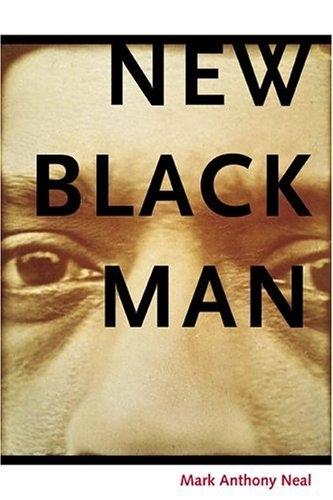
Join Janell Hobson (SUNY-Albany) and Mark Anthony Neal (Duke University) at a Book-Signing Event in celebration of their new books
Venus in the Dark: Blackness and Beauty in Popular Culture (Routledge)
and
New Black Man: Rethinking Black Masculinity (Routledge)
***
Thursday September 22 2005
7:00 PM
Talking Leaves Books
3158 Main Street in Buffalo, NY, 14214
(716) 837-8554
Book-Signing and Discussion
Join Masani Alexis DeVeaux and Mark Anthony Neal as they discuss their most recent books Warrior Poet: The Life of Audre Lorde and New Black Man and comment on recent events surrounding Hurricane Katrina
***
Friday September 23, 2005
3:00 PM
State University of New York College at Fredonia
Fenton Hall 105
Book-Signing and Lecture
Mark Anthony Neal, '87, '93, faculty member in the African and African American Studies Program at Duke University and National Public Radio commentator, will speak on campus Friday, Sept. 23 at 3 p.m. in 105 Fenton Hall as a guest of the English Department.
His talk, sponsored by the department's Mary Louise White Fund endowed through the Fredonia College Foundation, is entitled "What the Hell Is a Male Feminist? Rethinking Masculinity in a Post-Feminist World." Relating closely to his most recent book, New Black Man: Rethinking Black Masculinity (2005), the talk will be followed by a brief question-and-answer session, book-signing and reception.
For more information regarding this event, contact Natalie Gerber (English) at (716) 673-3851.
Monday, September 12, 2005
Blackademe Weighs in on Katrina, 9/11 and Kanye West
It Is About Race
by William Jelani Cobb
William Jelani Cobb, Ph.D. is an Assistant Professor of History at Spelman College.
***
Commentary: A Perspective on Looters and Race
by Lester Spence
Lester Kenyatta Spence is Assistant Professor of Political Science at Johns Hopkins University
***
Left Behind: Backdrop to a National Crisis
by Peniel E. Joseph, Ph.D.
Peniel E. Joseph teaches in the Department of Africana Studies at SUNY-Stony Brook.
***
Wahneema Lubiano on Race, Class, Katrina and the Left
Wahneema Lubiano is Associate Professor of Literature and African and African American Studies at Duke University
***
Commentary: New Orleans' Cities of the Dead
by Karla Holloway
Karla FC Holloway is William R. Kenan Professor of English at Duke University
***
‘Our Tsunami’: Race, Religion and Mourning in Louisiana, Mississippi and Alabama
A Sermon by Maurice O. Wallace
Maurice Wallace is Associate Professor of English and African and African-American Studies at Duke University
***
Commentary”: On the Fourth Anniversary of Sept. 11
by Farah Jasmine Griffin
Farah Jasmine Griffin is Professor of English and Comparative Literature at Columbia University.
***
Thank You, Kanye!
by Fanon Che Wilkins
Fanon Che Wilkins is an Assistant Professor of History and African American Studies at the University of Illinois at Urbana-Champaign
***
Race-ing Katrina
by Mark Anthony Neal
Mark Anthony Neal is Associate Professor of African and African-American Studies at Duke University
Wahneema Lubiano on Race, Class and Katrina

'Killing Them Softly': Race, Class and Hurricane Katrina
by Wahneema Lubiano
September 6, 2005
“Accompanying her husband, former President George H.W. Bush, on a tour of hurricane relief centers in Houston, Barbara Bush said today, referring to the poor who had lost everything back home and evacuated, “This is working very well for them. And so many of the people in the arena here, you know were underprivileged anyway, so this–this (she chuckles slightly) is working very well for them.”
The politics of life and death are articulated in public and private conversations, in allusions to past and present history, in unacknowledged desires and fears, as well as in the movements and undertakings of the powerful. In these private and public conversations, allusions, desires and fears, movements, and undertakings, race is not only race, class is not only class. And as people talk in this moment they don’t always express or even know what they want or fear as they’re wanting something or terrified by something. And always, always, power is directing our attention to something other than itself–unless, of course, it needs to show itself as something that comforts. The disaster (both natural and unnatural), the responses to this disaster, and the huge public conversation about the disaster is revealing and heightening the contradictions already present in our social order. And the history of those contradictions.
Many things have gone on in the response to Katrina:
Things including war on the poor, which is business as usual for this social order. Those who were already poor (employed or not) when Katrina hit are certainly poorer in the wake of the disaster.
Things including both the dynamics of racism in movements and undertakings and the expressions of racism in the large conversation.
Things including the fierce and generally unacknowledged messiness of the dynamics of racism and classism and the entangling of race and class concepts that live both in those confusions and in material life. Racism treats all racialized others (regardless of class position) as if they are the lower class, the dangerous class, made visible. And if race is the uneasily but still recognizable (to the general public understanding) social determination, class, of course, is the social ordering and determination that is most often treated as simply a limitor of consumer choices.
What it is possible to see and hear in the vicious, or stumbling, or confused, or simply inarticulate expressions from various people [archive: newspaper reportages, opinion, and letters to the editor, media, online discussion fora, conversations] about what was and is happening along the Gulf Coast is the imagination run wild and fearful. Many members of the U.S. public were unable to “see” Latinos/Latinas, Asian-Americans and Asians–members, for example, of a Vietnamese congregation trapped in their church, poor white people, abandoned foreign tourists – the vision of complexity is wiped out by the “darkness” so thoroughly on display, so thoroughly and simplistically discussed.
Racism side-swipes the usually non-raced (poor white people), or the lightly-raced (Latinos/Latinas, Asians and Asian Americans, etc.), or the accidentally and transiently raced (foreign tourists trapped by the disaster). The heterogeneity of the trapped is matched by the multiplicity of the forms of entrappment., by what was already in place, or, more to the point, by what wasn’t already in place–but the complexities are covered by the shadow cast by the people so multiply black.
Among those things that were devastatingly in place were plans and responsibility for a New Orleans evacuation that were privatized--controlled by a private contractor, IEM, that is a consultant to FEMA. But what was most devastatingly already in place was the softest of soft targets–the already poor. One discussant on the Left Business Observer list-serv referred to the criminal negligence of the U.S. government’s response as “killing them softly.” What wasn’t in place: an economic safety net for the poor to begin with, and regard for what that lack means in the midst of a disaster.
But the middle classes and much of the upper classes –in short, anyone whose assets stop short of helicopter or private jet ownership or access to same and who might someday need to get out of town or might need to have help in a disaster or crisis ought to be a little anxious right now. (I’m talking about all of us right now.) What many see as the criminal negligence of FEMA’s [archive: FEMA guideslines, FEMA regulations, various newspaper articles, government documents, letter from Louisiana governor to the President via Homeland Security, etc.] operations is also, I think, a form of disciplining aimed at the not-poor and/or the not-black as well who are not part of this disaster but are consuming it and its lessons from afar. Black poor people, and other poor or event just temporarily poor people, are the canaries in the coal mine. This government is in the process of abandoning us all to varying degrees. And it is that variance that is malleable and mitigated by the specifics of class and/or race.
Whether you are hitchhiking out of a disaster, driving out in a Honda or a Porsche, the structural horrors (material, economic, political) of the devastation of the Gulf Coast now will stretch out its tendrils to all of us. While the thickness and shape of the tendrils of a disaster will be affected by mitigating factors, what we will increasingly have in common is our rotting infrastructures and the abandonment of a sense of common good materially manifested by our government. (And the material consequences of the destruction of that region will hit us all even if unequally so.)
That abandonment of some notion of a common good has shown up for decades in the public acceptance of U.S. disregard for the outside world. Disregard isn’t containable–it travels out to the world and comes back home too. What we’ve been willing to support in the spread of this and past governments’ brutalizing of other countries, other people, has brutalized our own imaginations of what we are as a social order.
The present hyper-visibilities – the plight of specific kinds of people in this moment as well as the specifics of expressions of racism directed at black Americans, in addition to what I call the flickering visibilities – the plight of poor white people, of temporarily poor people (displaced tourists; medical professionals, other helpers), could be a goad to constituting an alternative to the idea of everyone for him or her individual self.
But there’s noise that interferes with that signal. When George Bush was talking about rebuilding the house of Trent Lott and sitting on the porch with Lott, this language acted as a shout-out to the racist part of this administration’s base because, whatever the complexities of the actually existing Trent Lott, he resonates across the white supremacist U.S. as a defender of segregation [archive: newspapers, magazines, online fora (eg. The Free Republic.com), everyday discussions, etc.]. The resounding noise of that shout-out helps provide cover for the privatization of reconstruction (Hello Halliburton) [archive: government documents, newspaper accounts, official correspondence, etc.] and disaster management (Hello IEM) [IEM Press Release, New Orleans Times-Picayune article], and a reward to the refiners via the lifting of environmental protections [various newspaper articles, White House Press Release] – an enrichment that is a shoutout to the richest part of Bush’s base.
The casual throwaway racist language of “savages running wild”, of “people who should be grateful that the disaster will provide them with a better life” in the Astrodome; the cliches about black welfare dependency and the bad behavior of “those people” showing that they can’t really be saved [archive: huge volume of newspaper letters to the editor, online fora, everyday conversations], and the willingness of those in charge of recovery simply throwing food and water [archive: newspapers, television footage; online fora] at victims of this storm–all of these things and more provide cover for other forms of class warfare on the part of the powerful and cover for the work of dismantling, one disaster or crisis at a time if necessary, the idea that our social order can expect its government [archive: conservative position papers; conservative magazines (eg. The American Spectator), online fora] to do more for its citizenry than to usher public money to what it sees as that money’s “rightful” owners, the corporations that paid for the heads of that government’s election.
The response to this disaster does not have to be actually racist; racism is so much a part of our culture that it is always available as a simple tool of convenience. It can be called onto duty and then dismissed. One of the jobs that it does terrifically well, again and again, is to divert attention from what else is happening. The public imagination was focused on the scary blackness of people massed at the Superdome or the Convention Center, standing on the highway, standing on roofs. That vivid visibility also pushes the other people (in their heterogeneity) also there out of the picture frame until they are pulled into the picture as representations of the not-black and scary “properly” behaving fictions. I am describing a relay of framing movement as these “proper” victims are contrasted to those people spectacularly on display as visible contrasts to the “lawless” and the “looters” of New Orleans.
Late last night I was taking a break from obsessing on the internet and saw Tucker Carlson on CNN doing up a follow-up interview with Andre Broussard (president of Jefferson Parish ) who, on Sunday, had broken down crying after criticizing the federal government on “Meet the Press.” Carlson asked Broussard to comment on the awfulness of the looting in New Orleans (cue pictures of burning buildings in NO), and Broussard said, “well, some of that is going on here too. Our shopping center burned on Wednesday.” Broussard went on to describe what the police and national guard were having to contend with in his area.
It was a moment when the possibility of bad non-black actors was at least alluded to. It was also a moment that passed really quickly.
The comfortably well-off U.S. (and/or those who simply want comfort and aren’t too particular about what it costs in other people) – can have that desire for comfort fed by the disciplining of the visible poor – the dangerous classes.
I want to be clear, so I’m going to say this as directly as I can. I’m bringing together four areas of concern: (1) the presence of racism does not mean the absence of class warfare against the poor and working class; (2) a war on the poor does not mean that people of considerable color aren’talso the easier targets; (3) the analytic insufficiency of a U.S. black/white binary around racial thinking does not mean that other “others” can’t be thought about; and (4) the attention being paid to particular subsets of objects of governmental criminal negligence does not mean we shouldn’t all be terrified of the closing down of idea of a common good.
* * * * *
I’m going to finish here with some attention to “looting” – both the idea and the activity. All you have to do is tell them they are being attacked, and denounce the pacifists for lack of patriotism, and exposing the country to greater danger." -- Herman Goering at the Nuremberg trials.
The September 2nd - 5th weekend edition of USA Today (online) ran as one of its sub- headline (in the online edition, it was to the right of the main headline): “Lawlessness Fosters Fear.” A word here about lawlessness and its class belonging. If we are not a lawless nation from the very top of our government’s hierarchy, I don’t know what we are. (Actually existing criminals ought to be indignant at the expressions of hypocrisy.) We are up to our noses in a lawless war gerry-rigged by lies; we are led by an administration for whom laws and regulations that get in the way of the good of corporations are routinely ground under its wheels; the engine of help that took its time getting to the disaster region is a product of that lawlessness and disregard for its people. Our attention is being directed to the lawlessness of individuals, and we respond with fear: “that could happen here, that could happen to me.” And we are gratified when “order” is talked about and seems to have been restored. Sometimes all that is required for the achievement of that satisfaction is to see a black male lying on the ground with his hands cuffed behind his back [archive: newspapers, television, online fora, conversation].
In the meantime, we are at the mercy of a lawless over-class that is looting the state and a state that is looting itself for its friends (yet another Hello to Halliburton) and that is invisible to us. The reek of sanctimoniousness and self-righteousness that is drifting outward from the haves of the Bush administration and condemning not only looters, people who “didn’t have the sense to leave,” the local governments, and the poor–the poor , who Barbara Bush tells us are better off now that they’re in the Astrodome than they’ve ever been in their lives–well, the stench of that self-righteousness rivals for noxiousness the smell of shit from the NO Superdome and Convention Center that people there had to breathe for almost a week.
In the U.S. state we seem to be really particular about our tolerance of looters. In fact, we have a tiered system for even thinking about them. Within this community of thought, the absolute bottom is occupied by people who steal TVs. The lowest of that low are those who might barter the TVs for drugs; slightly above them (but still lower than a snake’s belt buckle) are those who steal TVs and might barter them for water, money, clothing, etc.; rising above them are those who are looting food, water, shoes, clothing for their own use or that of others’ close to them (who nonetheless, President Bush told us, should be included in the most dire penalty for looting).
By contrast, occupying the very top tier of looters would be the big state actors, like the Bush administration, looting the national budget for its illegal war and accompanied by the war and disaster profiteers who are engorging themselves and will continue to do so for the foreseeable future but who, I admit, aren’t often photographed carrying away their billions in plastic garbage bags while running down the street.
When people start talking about a shoot-to-kill policy for looters, aren’t they in danger of committing the crime of threatening the life of the President of the U.S.?
We might want to think about why it is the petty thief who gets shot while these other looters simply get richer (Hello Dick Cheney–I wanted a break from saying Halliburton).
Finally, to those who have said and continue to say that this isn’t about race or class, you simply aren’t paying attention. What is happening is, of course, about more than those social facts, but the existence of those social realities within a nation that allows itself to accommodate those realities will be rewarded with all the horrors brought on by the public’s inability to see what has been and continues to be made within the terms of that accommodation. We accept living within a world of unequal division of resources. We accept living in a state that is intent upon re-making the world to its accommodation. We accept the tearing down of a material fabric of governmental responsibility for which we pay with our taxes. And we accept this in some significant part because class inequality and racial inequality are as American as apple pie. The politics of death are articulated in the life we deny the most vulnerable of our people. And the life that is increasingly going to be denied to more and more of us.
***
Wahneema Lubiano is Associate Professor of Literature and African and African American Studies at Duke University
The politics of life and death are articulated in public and private conversations, in allusions to past and present history, in unacknowledged desires and fears, as well as in the movements and undertakings of the powerful. In these private and public conversations, allusions, desires and fears, movements, and undertakings, race is not only race, class is not only class. And as people talk in this moment they don’t always express or even know what they want or fear as they’re wanting something or terrified by something. And always, always, power is directing our attention to something other than itself–unless, of course, it needs to show itself as something that comforts. The disaster (both natural and unnatural), the responses to this disaster, and the huge public conversation about the disaster is revealing and heightening the contradictions already present in our social order. And the history of those contradictions.
Many things have gone on in the response to Katrina:
Things including war on the poor, which is business as usual for this social order. Those who were already poor (employed or not) when Katrina hit are certainly poorer in the wake of the disaster.
Things including both the dynamics of racism in movements and undertakings and the expressions of racism in the large conversation.
Things including the fierce and generally unacknowledged messiness of the dynamics of racism and classism and the entangling of race and class concepts that live both in those confusions and in material life. Racism treats all racialized others (regardless of class position) as if they are the lower class, the dangerous class, made visible. And if race is the uneasily but still recognizable (to the general public understanding) social determination, class, of course, is the social ordering and determination that is most often treated as simply a limitor of consumer choices.
What it is possible to see and hear in the vicious, or stumbling, or confused, or simply inarticulate expressions from various people [archive: newspaper reportages, opinion, and letters to the editor, media, online discussion fora, conversations] about what was and is happening along the Gulf Coast is the imagination run wild and fearful. Many members of the U.S. public were unable to “see” Latinos/Latinas, Asian-Americans and Asians–members, for example, of a Vietnamese congregation trapped in their church, poor white people, abandoned foreign tourists – the vision of complexity is wiped out by the “darkness” so thoroughly on display, so thoroughly and simplistically discussed.
Racism side-swipes the usually non-raced (poor white people), or the lightly-raced (Latinos/Latinas, Asians and Asian Americans, etc.), or the accidentally and transiently raced (foreign tourists trapped by the disaster). The heterogeneity of the trapped is matched by the multiplicity of the forms of entrappment., by what was already in place, or, more to the point, by what wasn’t already in place–but the complexities are covered by the shadow cast by the people so multiply black.
Among those things that were devastatingly in place were plans and responsibility for a New Orleans evacuation that were privatized--controlled by a private contractor, IEM, that is a consultant to FEMA. But what was most devastatingly already in place was the softest of soft targets–the already poor. One discussant on the Left Business Observer list-serv referred to the criminal negligence of the U.S. government’s response as “killing them softly.” What wasn’t in place: an economic safety net for the poor to begin with, and regard for what that lack means in the midst of a disaster.
But the middle classes and much of the upper classes –in short, anyone whose assets stop short of helicopter or private jet ownership or access to same and who might someday need to get out of town or might need to have help in a disaster or crisis ought to be a little anxious right now. (I’m talking about all of us right now.) What many see as the criminal negligence of FEMA’s [archive: FEMA guideslines, FEMA regulations, various newspaper articles, government documents, letter from Louisiana governor to the President via Homeland Security, etc.] operations is also, I think, a form of disciplining aimed at the not-poor and/or the not-black as well who are not part of this disaster but are consuming it and its lessons from afar. Black poor people, and other poor or event just temporarily poor people, are the canaries in the coal mine. This government is in the process of abandoning us all to varying degrees. And it is that variance that is malleable and mitigated by the specifics of class and/or race.
Whether you are hitchhiking out of a disaster, driving out in a Honda or a Porsche, the structural horrors (material, economic, political) of the devastation of the Gulf Coast now will stretch out its tendrils to all of us. While the thickness and shape of the tendrils of a disaster will be affected by mitigating factors, what we will increasingly have in common is our rotting infrastructures and the abandonment of a sense of common good materially manifested by our government. (And the material consequences of the destruction of that region will hit us all even if unequally so.)
That abandonment of some notion of a common good has shown up for decades in the public acceptance of U.S. disregard for the outside world. Disregard isn’t containable–it travels out to the world and comes back home too. What we’ve been willing to support in the spread of this and past governments’ brutalizing of other countries, other people, has brutalized our own imaginations of what we are as a social order.
The present hyper-visibilities – the plight of specific kinds of people in this moment as well as the specifics of expressions of racism directed at black Americans, in addition to what I call the flickering visibilities – the plight of poor white people, of temporarily poor people (displaced tourists; medical professionals, other helpers), could be a goad to constituting an alternative to the idea of everyone for him or her individual self.
But there’s noise that interferes with that signal. When George Bush was talking about rebuilding the house of Trent Lott and sitting on the porch with Lott, this language acted as a shout-out to the racist part of this administration’s base because, whatever the complexities of the actually existing Trent Lott, he resonates across the white supremacist U.S. as a defender of segregation [archive: newspapers, magazines, online fora (eg. The Free Republic.com), everyday discussions, etc.]. The resounding noise of that shout-out helps provide cover for the privatization of reconstruction (Hello Halliburton) [archive: government documents, newspaper accounts, official correspondence, etc.] and disaster management (Hello IEM) [IEM Press Release, New Orleans Times-Picayune article], and a reward to the refiners via the lifting of environmental protections [various newspaper articles, White House Press Release] – an enrichment that is a shoutout to the richest part of Bush’s base.
The casual throwaway racist language of “savages running wild”, of “people who should be grateful that the disaster will provide them with a better life” in the Astrodome; the cliches about black welfare dependency and the bad behavior of “those people” showing that they can’t really be saved [archive: huge volume of newspaper letters to the editor, online fora, everyday conversations], and the willingness of those in charge of recovery simply throwing food and water [archive: newspapers, television footage; online fora] at victims of this storm–all of these things and more provide cover for other forms of class warfare on the part of the powerful and cover for the work of dismantling, one disaster or crisis at a time if necessary, the idea that our social order can expect its government [archive: conservative position papers; conservative magazines (eg. The American Spectator), online fora] to do more for its citizenry than to usher public money to what it sees as that money’s “rightful” owners, the corporations that paid for the heads of that government’s election.
The response to this disaster does not have to be actually racist; racism is so much a part of our culture that it is always available as a simple tool of convenience. It can be called onto duty and then dismissed. One of the jobs that it does terrifically well, again and again, is to divert attention from what else is happening. The public imagination was focused on the scary blackness of people massed at the Superdome or the Convention Center, standing on the highway, standing on roofs. That vivid visibility also pushes the other people (in their heterogeneity) also there out of the picture frame until they are pulled into the picture as representations of the not-black and scary “properly” behaving fictions. I am describing a relay of framing movement as these “proper” victims are contrasted to those people spectacularly on display as visible contrasts to the “lawless” and the “looters” of New Orleans.
Late last night I was taking a break from obsessing on the internet and saw Tucker Carlson on CNN doing up a follow-up interview with Andre Broussard (president of Jefferson Parish ) who, on Sunday, had broken down crying after criticizing the federal government on “Meet the Press.” Carlson asked Broussard to comment on the awfulness of the looting in New Orleans (cue pictures of burning buildings in NO), and Broussard said, “well, some of that is going on here too. Our shopping center burned on Wednesday.” Broussard went on to describe what the police and national guard were having to contend with in his area.
It was a moment when the possibility of bad non-black actors was at least alluded to. It was also a moment that passed really quickly.
The comfortably well-off U.S. (and/or those who simply want comfort and aren’t too particular about what it costs in other people) – can have that desire for comfort fed by the disciplining of the visible poor – the dangerous classes.
I want to be clear, so I’m going to say this as directly as I can. I’m bringing together four areas of concern: (1) the presence of racism does not mean the absence of class warfare against the poor and working class; (2) a war on the poor does not mean that people of considerable color aren’talso the easier targets; (3) the analytic insufficiency of a U.S. black/white binary around racial thinking does not mean that other “others” can’t be thought about; and (4) the attention being paid to particular subsets of objects of governmental criminal negligence does not mean we shouldn’t all be terrified of the closing down of idea of a common good.
* * * * *
I’m going to finish here with some attention to “looting” – both the idea and the activity. All you have to do is tell them they are being attacked, and denounce the pacifists for lack of patriotism, and exposing the country to greater danger." -- Herman Goering at the Nuremberg trials.
The September 2nd - 5th weekend edition of USA Today (online) ran as one of its sub- headline (in the online edition, it was to the right of the main headline): “Lawlessness Fosters Fear.” A word here about lawlessness and its class belonging. If we are not a lawless nation from the very top of our government’s hierarchy, I don’t know what we are. (Actually existing criminals ought to be indignant at the expressions of hypocrisy.) We are up to our noses in a lawless war gerry-rigged by lies; we are led by an administration for whom laws and regulations that get in the way of the good of corporations are routinely ground under its wheels; the engine of help that took its time getting to the disaster region is a product of that lawlessness and disregard for its people. Our attention is being directed to the lawlessness of individuals, and we respond with fear: “that could happen here, that could happen to me.” And we are gratified when “order” is talked about and seems to have been restored. Sometimes all that is required for the achievement of that satisfaction is to see a black male lying on the ground with his hands cuffed behind his back [archive: newspapers, television, online fora, conversation].
In the meantime, we are at the mercy of a lawless over-class that is looting the state and a state that is looting itself for its friends (yet another Hello to Halliburton) and that is invisible to us. The reek of sanctimoniousness and self-righteousness that is drifting outward from the haves of the Bush administration and condemning not only looters, people who “didn’t have the sense to leave,” the local governments, and the poor–the poor , who Barbara Bush tells us are better off now that they’re in the Astrodome than they’ve ever been in their lives–well, the stench of that self-righteousness rivals for noxiousness the smell of shit from the NO Superdome and Convention Center that people there had to breathe for almost a week.
In the U.S. state we seem to be really particular about our tolerance of looters. In fact, we have a tiered system for even thinking about them. Within this community of thought, the absolute bottom is occupied by people who steal TVs. The lowest of that low are those who might barter the TVs for drugs; slightly above them (but still lower than a snake’s belt buckle) are those who steal TVs and might barter them for water, money, clothing, etc.; rising above them are those who are looting food, water, shoes, clothing for their own use or that of others’ close to them (who nonetheless, President Bush told us, should be included in the most dire penalty for looting).
By contrast, occupying the very top tier of looters would be the big state actors, like the Bush administration, looting the national budget for its illegal war and accompanied by the war and disaster profiteers who are engorging themselves and will continue to do so for the foreseeable future but who, I admit, aren’t often photographed carrying away their billions in plastic garbage bags while running down the street.
When people start talking about a shoot-to-kill policy for looters, aren’t they in danger of committing the crime of threatening the life of the President of the U.S.?
We might want to think about why it is the petty thief who gets shot while these other looters simply get richer (Hello Dick Cheney–I wanted a break from saying Halliburton).
Finally, to those who have said and continue to say that this isn’t about race or class, you simply aren’t paying attention. What is happening is, of course, about more than those social facts, but the existence of those social realities within a nation that allows itself to accommodate those realities will be rewarded with all the horrors brought on by the public’s inability to see what has been and continues to be made within the terms of that accommodation. We accept living within a world of unequal division of resources. We accept living in a state that is intent upon re-making the world to its accommodation. We accept the tearing down of a material fabric of governmental responsibility for which we pay with our taxes. And we accept this in some significant part because class inequality and racial inequality are as American as apple pie. The politics of death are articulated in the life we deny the most vulnerable of our people. And the life that is increasingly going to be denied to more and more of us.
***
Subscribe to:
Posts (Atom)
