Showing posts with label Paul Porter. Show all posts

Wednesday, June 22, 2011

Lisa Fager Bediako: Not About Rape, Not About Rihanna


by Lisa Fager Bediako | Special to CNN

(CNN) -- Rihanna's "Man Down" video was the motivation for Industry Ears -- a media watchdog group I co-founded -- to recently join forces with the Parents Television Council to hold media corporations, in this case Black Entertainment Television, accountable. We argued that the graphic violence aired in the video was inappropriate for the age group that makes up nearly half of BET's "106 & Park" video show's audience: 12- to 17-year-olds.

Our concern lies not with Rihanna as an artist, but with BET and its parent company, Viacom, as purveyors of violence. Over the last several weeks, however, I have witnessed our original concern with the video become twisted from a national discussion about protecting children into one of feminist empowerment and free artistic expression.

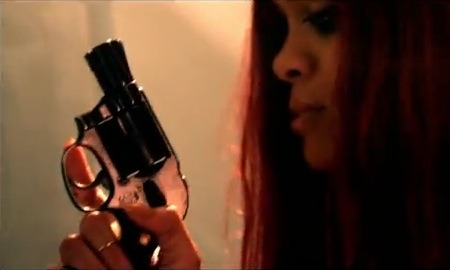
The first moments of the "Man Down" video show a man in a crowded train station being shot in the head and falling into a puddle of his own blood. This grisly image is, to us, the most questionable part of the video.

Our suggestion to BET is that they edit the "too graphic for kids" portion of this video, roughly the opening 45 seconds. We have all seen guns, drug paraphernalia, and T-shirt logos blurred out or whole scenes edited out of music videos that appear on music channels. MTV and BET routinely require record labels to edit videos, so why not this one?

Some argue that the discovery later in the video that the man being shot is a rapist, and that the woman shooting him is his victim, makes this depiction of violence acceptable. We disagree.

In his 30 years of viewing BET, Paul Porter, Industry Ears co-founder and former BET video programmer, says he has never witnessed "such a cold, calculated execution of murder in prime time." Cable television content is not regulated like broadcast television, but most cable networks have adopted the broadcast television standard of airing sexually explicit, violent and mature content after 10 p.m. and adding disclaimers, especially if the program attracts younger viewers. "106 & Park" airs weekdays at 6 p.m.

Read the Full Essay @ CNN.com 

***
 
Lisa Fager Bediako is president of Industry Ears and formerly worked for Capitol EMI Records, Discovery Communications, CBS radio and other entertainment media outlets.

Wednesday, June 8, 2011

One ‘Man Down’; Rape Culture Still Standing


One ‘Man Down’; Rape Culture Still Standing
by Mark Anthony Neal | @NewBlackMan

Art should disturb the public square and Rihanna has done just that with the music video for her song “Man Down,” directed by long-time collaborator Anthony Mandler. The song and video tell the story of a casual encounter in a Jamaican dancehall, that turns into a rape, when a young woman rejects the sexual advances of the man she has just danced with. Much of the negative criticism directed at “Man Down” revolves a revenge act, where Rihanna’s character shoots her rapist in cold-blood.

Some have found the gun violence in video’s opening sensationalist and gratuitous. The Parents Television Council chided Rihanna, offering that “Instead of telling victims they should seek help, Rihanna released a music video that gives retaliation in the form of premeditated murder the imprimatur of acceptability.” Paul Porter, co-founder of the influential media watchdog Industry Ears, suggested that a double standard existed, noting that, “If Chris Brown shot a woman in his new video and BET premiered it, the world would stop.” Both responses have some validity, but they also willfully dismiss the broader contexts in which rape functions in our society. Such violence becomes a last resort for some women, because of the insidious ways rape victims are demonized and rapists are protected in American society.

Part of the problem with Rihanna and Anthony Mandler’s intervention, is the problem of the messenger herself. For far too many Rihanna’s objectivity remains suspect in the incidence of partner violence, that was her own life. As a pop-Top 40 star who has consistently delivered pabulum to the masses, minus any of the irony that we would assign to Lady Gaga or even Beyonce, there are some who will simply refuse to take Rihanna seriously—dismissing this intervention as little more than stylized violence in the pursuit of maintaining the re-boot. Porter, for example, argues that BET was willing to co-sign the video, which debuted on the network, all in the name of securing Rihanna’s talents for the upcoming BET Awards Show. It’s that very level of cynicism that makes public discussions of rape so difficult to engage.

I imagine that much less criticism would have been levied at Erykah Badu, Marsha Ambrosias or Mary J. Blige for the same intervention, in large part because they are thought to possess a gravitas—hard-earned, no doubt—that Rihanna doesn’t. This particular aspect of the response to Rihanna’s “Man Down” video highlights the troubling tendency, among critics and fans, to limit the artistic ambitions of artists, particularly women and artists of color. Rihanna’s music has never been great art (nor should it have to be), but that doesn’t mean that the visual presentation of her music can’t be provocative and meaningful in ways that we nominally assign to art. Additionally, responses to “Man Down” also adhere to the long established practice of rendering all forms of Black expressions as a form of Realism, aided and abetted by a celebrity culture that consistently blurs the lines between the real and the staged.

Ultimately discussions of “Man Down” should pivot on whether the gun shooting that opens the video was a measured and appropriate response to an act of rape. Perhaps in some simplistic context, such violence might seem unnecessary, yet in a culture that consistently diminishes the violence associated with rape, often employing user friendly euphemisms like sexual violence—as was the case in the initial New York Times coverage of a recent Texas gang rape case—rather than call a rape a rape. As an artistic statement, intended to disturb the public square, Rihanna’s deployment of the gun is an appropriate response to the relative silence associated with acts of rape, let alone the residual violence that women accusers are subject to in the denial and dismissal of their victimization with terms like “she deserved it,” or “she was asking for it” because of her style of dress.

One wishes that as much energy that was expended criticizing Rihanna’s video for its gun violence was expended to address the ravages of the rape culture that we live in. One man may be down, but rape culture is still standing.

***

Mark Anthony Neal, a Professor of African-American Studies at Duke University, is the author of five books, including the forthcoming Looking for Leroy and the co-editor (with Murray Forman) of That's the Joint!: The Hip-Hop Studies Reader (2nd Edition) which will be published next month.  Follow him on Twitter @NewBlackMan