Showing posts with label COINTELPRO. Show all posts

Wednesday, June 8, 2011

Remembering Geronimo Pratt


Remembering Geronimo Pratt
by Bakari Kitwana | NewsOne

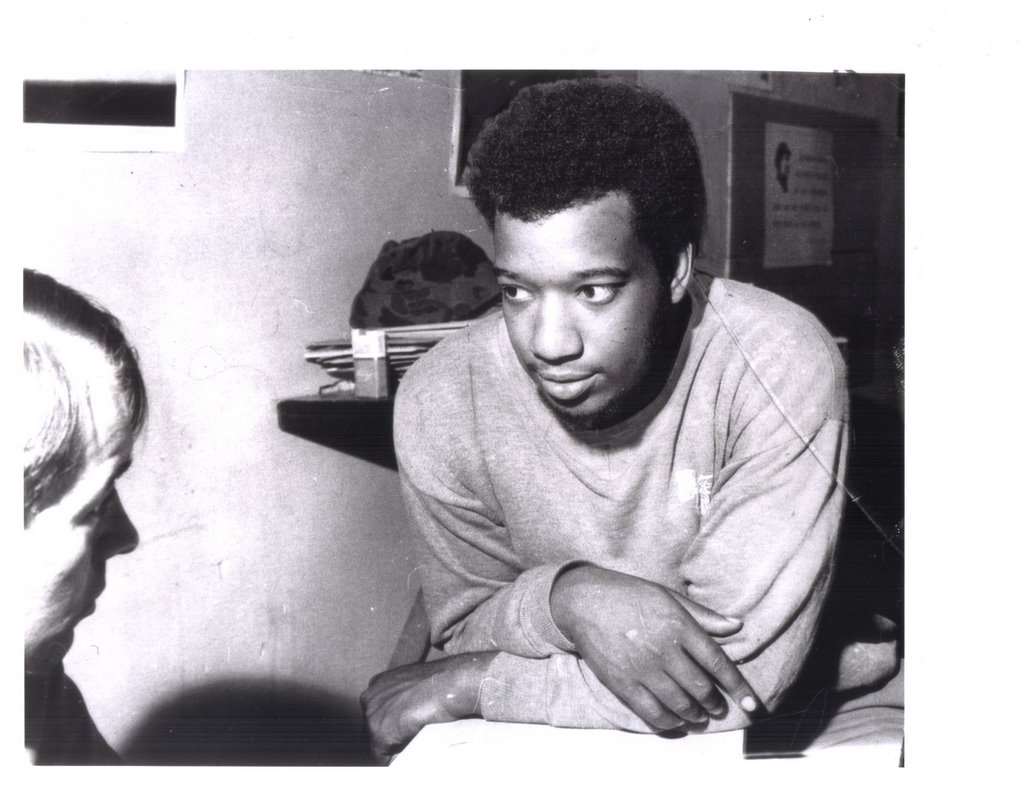
Political activists around the country are still absorbing the news of Geronimo ji Jaga’s death. For those of us who came of age in the 80s and 90s, the struggles of the late 1960s and early 1970s were in many ways a gateway for our examination of the history of Black political resistance in the US. Geronimo ji Jaga (formerly Geronimo Pratt) and his personal struggle, as well as his contributions to the fight for social justice were impossible to ignore. His commitment, humility, clear thinking as well as his sense of both the longevity and continuity of the Black Freedom Movement in the US all stood out to those who knew him.

I interviewed him for The Source magazine in early September 1997 about three months after he was released from prison, having served 27 years of a life sentence for a murder he didn’t commit. Three things stood out from the interview, all of which have been missed by recent commentary celebrating his life and impact.

First that famed attorney Johnnie Cochran was not only his lawyer when ji Jaga gained his freedom, but also represented him in his original trial. They were from the same hometown and, according to ji Jaga, Cochran’s conscious over the years was dogged by the injustice of the US criminal system that resulted in the 1970 sentence. Second, according to ji Jaga, he never formally joined the Black Panther Party. As he remembered it, he worked with several Black activist organizations and was captured by the police while working with the Black Panther Party for Self-Defense. And finally, his analysis of the UCLA 1969 shoot-out between Black Panthers and US Organization members that led to the death of his best friend Bunchy Carter and John Huggins is not a simple tale of Black in-fighting. Now is a good time to revisit all three.

Misinformation is so much part of our current political moment, particularly as the 24-hour news cycle converges with the ascendance of Fox News. In this climate, the conservative analysis of race has been normalized in mainstream discourse. This understanding of racial politics, along with the election of Barack Obama and a first term marked by little for Blacks to celebrate, makes it a particularly challenging time to be politically Black in the United States. Ask Jeremiah Wright, Shirley Sherrod, and Van Jones—all three serious advocates for the rights and humanity of everyday people whose critiques of politics and race made them far too easily demonized as anti-American.

If we have entered the era where the range of Black political thought beyond the mainstream liberal-conservative purview is delegitimized, Geronimo ji Jaga’s life and death is a reminder of our need to resist it.

EXCERPTS FROM THE 1997 INTERVIEW:

How did you get involved with the Black Panther Party?

Technically I never joined the Black Panther Party. After Martin Luther King’s death, an elder of mine who was related to Bunchy Carter’s elder and Johnnie Cochran’s elder requested that those of us in the South that had military training render some sort of discipline to brothers in urban areas who were running amuck getting shot right and left, running down the street shooting guns with bullets half filled which they were buying at the local hardware store. When I arrived at UCLA, Bunchy was just getting out of prison and needed college to help with his parole. We stayed together in the dorm room on campus. But we were mainly working to build the infrastructure of the Party.

You ended up as the Deputy Minister of Defense. How did that come about?

They did not have a Ministry of Defense when I came on the scene. There was one office in Oakland and a half an office in San Francisco. I helped build the San Francisco branch and all of the chapters throughout the South—New Orleans, Dallas, Atlanta, Memphis, Winston-Salem, North Carolina and other places. We did it under the banner of the Panthers because that’s what was feasible at the time. Because of shoot-outs and all that stuff, the work I did with the Panthers, overshadowed the stuff that I did with the Republic of New Afrika, the Mau Mau, the Black Liberation Army, the Brown Berets, the Black Berets, even the Fruit of Islam—but I saw my work with the Panthers as temporary. When Bunchy was killed, the Panthers wanted me to fill his position [as leader of the Southern California chapter]. I didn’t want to do it because I was already overloaded with other stuff. But it was just so hard to find someone who could handle LA given the problems with the police. So I ended up doing it, reluctantly. And this is how I ended up on the central committee of the Black Panther Party. I never took an oath and never joined the Party.

What was your role as Deputy Minister of Defense?

The Ministry of Defense was largely based on infrastructure: cell systems in the cities; creating an underground for situations when you need to get individuals out of the city or country. When you get shot by the police, you can’t be taken to no hospital. You gotta have medical underground as well. That’s where the preachers, bible school teachers and a lot of others behind the scenes got involved. When Huey got out of prison in 1970, this stuff blew his mind.

What were the strengths and weaknesses of the Party?

The main strength was the discipline which allowed for a brother or sister to feed children early in the morning, go to school and P.E. classes during the day, go to work and selling papers in the afternoon, and patrol the police at night. The weak points were our naiveté, our youth, and the lack of experience. But even at that I really salute the resistance of the generation! I have a problem saying it was just the Panthers `cause that’s not right. When you do that you x-out so much. There was more collective work going on than the popular written history of the period suggests. And when you talk about SNCC you are talking about a whole broader light than the Panther struggle. So you have to talk about that separate—that’s a bigger thing. They gave rise to the intelligence of a whole bunch of Panthers.

What was Bunchy Carter like?

He was a giant, a shining prince. He had been the head of the Slausons gang. He was transforming the gangbangers in Los Angeles into that revolutionary arm. He was my mentor. Such a warm and lovable, brainy brother. At the same time he was such a fierce brother. He was very dynamic—he was an ex-boxer, and he was even on The Little Rascals probably back in the fifties. His main claim to fame was what he did with the gangs in the city. And that was a monumental thing. All that was before Bunchy became a Panther.

Because of the death of Bunchy Carter as a result of the Panthers’ clash with Maulana Karenga’s US organization, even today rumors persists that Dr. Karenga was an informant. . .

Not true. Definitely not true.

What was the Panther clash with US all about?

We considered Karenga’s US organization to be a cultural-nationalist organization. We were considered revolutionary nationalist. So, we have a common denominator. We both are nationalist. We never had antagonistic contradictions, just ideological contradictions. The pig manipulated those contradictions to the extent that warfare jumped off. Truth is the first casualty in war. It began to be said that Karenga was rat, but that wasn’t true. The death of Bunchy and John Huggins on UCLA campus was caused by an agent creating a disturbance which caused a Panther to pull out a gun and which subsequently caused US members to pull out their guns to defend themselves. In the ensuing gun battle Bunchy Carter and John Huggins lay dead.

What’s your worst memory of the 27 years you spent in prison?

I accepted the fact that when I joined the movement I was gonna be killed. When we were sent off to these urban areas we were actually told, “Look, you’re either gonna get killed, put in prison, or if you’re lucky we can get you out the country before they do that. Those are the three options. To survive is only a dream.” So when I was captured, I began to disconnect. So it’s hard to say good or bad moments because this is a whole different reality that had a life of its own.

Many people would say that during those twenty-seven years that you lost something. How would you describe it?

I considered myself chopped off the game plan when I was arrested. But it was incumbent upon me to free myself and continue to struggle again. You can’t look back twenty-seven years and say it was a lost. I’m still living. I run about five miles every morning, and I can still bench press 300 pounds ten times. I can give you ten reps (laughter). Also I hope I’m a little more intelligent and I’m not crazy. It’s a hell of a gain that I survived.

What music most influenced you during that time?

In 1975 I heard some music on a prison radio. I hadn’t seen a television in six years until about 1976, and it was at the end of the tier. I couldn’t see it unless I stood up sideways against the bars. When I really got to see a television again was in 1977. So, I was basically without music and television for the first eight years when I was in the hole. When I was able to get on the main line and listen to music and see T.V., of course the things I wanted to hear were the things I heard when I was on the street. But by then those songs had to be at least nine years old. So, I would listen to oldies. And the new music it was hard to get into, but I slowly began to get into that. But when hip-hop began to come around, it caught on like wildfire. It reminds me how the Panthers and other groups started to catch on like wildfire. It reminded me of Gil Scott-Heron. He would spit that knowledge so clearly and that was the first thing that came to mind when I heard Grandmaster Flash, KRS-One, Paris, Public Enemy and Sista Soldier—the militancy.

What type of books were you reading?

We maintained study groups throughout when I was on main line. Much of the focus was on Cheik Anta Diop—He was considered by us to be the last Pharaoh. We also read the works compiled by Ivan Van Sertima. Of course, there were others.

In terms of a spiritual center, what helped you to get through?

Well the ancestors guided me back to the oldest religion known to man—Maat. We also studied those meditations that were developed by all of our ancestors—the Natives, the Hispanics, the Irish—not just the ones that were strictly African.

The youngest of seven children, Ji Jaga was born Elmer Pratt, in Morgan City, a port city in southwestern Louisiana, two hours south of New Orleans, on September 13 1947. 120 years earlier marked the death of Jean Lafitte, the so-called “gentleman’s pirate” of French ancestry who settled in Haiti in the early 1800s until he was run out with most other Europeans during the Haitian revolution. Lafitte’s claim to fame was smuggling enslaved Africans from the Caribbean to Louisiana during the Spanish embargo of the late 17th & early 18th centuries, often taking refuge in the same bayous that were Pratt’s childhood home. Pratt was dubbed Geronimo by Bunchy Carter and assumed the name ji Jaga in 1968. The Jaga were a West African clan of Angolan warriors who Geronimo says he descends from. Many of the Jaga came to Brazil with the Portuguese as free men and women and some were later found among maroon societies in Brazil. How Jaga descendants could have ended up in Louisiana is open to historical interpretation, as most Angolans who ended up in Louisiana and Mississippi and neighboring states entered the US via South Carolina. Some Jaga were possibly among the maroon communities in the Louisiana swamplands as well. According to the Pratt, the Jaga refused to accept slavery—hence his strong identification with the name.

What were some of your earliest early childhood memories?

Well, joyous times mostly. Morgan City was a very rural setting and very nationalistic, self-reliant, and self-determining. It was a very close-knit community. Until I was a ripe old age, I thought that I belonged to a nation that was run by Blacks. And across the street was another nation, a white nation. Segregation across the tracks. We had our own national anthem, “Lift Every Voice and Sing,” our own police, and everything. We didn’t call on the man across the street for nothing and it was very good that I grew up that way. The worst memories were those of when the Klan would ride. During one of those rides, I lost a close friend at an early age named Clayborne Brown who was hit in the head by the Klan and drowned. They found his body three days later in the Chaparral River. And, we all went to the River and saw them pull him in. Clayborne was real dark-skinned and when they pulled him out of the river, his body was like translucent blue. Then a few years later, one Halloween night, the Klan jumped on my brother. So there are bad memories like that.

Does your mother still live there?

She’s gone off into senility, but she’s still living—94 years old this year. [She died in 2003 at 98 years-old] And every time I’ve left home, when I come back the first person I go to see is my mama. So, that’s what I did when I got out of prison. Mama has always stood by me. And, I understood why. She was a very brainy person. Our foreparents, her mother was the first to bring education into that part of the swampland and set up the first school. When I was growing up, Mama used to rock us in her chair on the front porch. We grew up in a shack and we were all born in that house, about what you would call a block from the Chaparral River. She would recite Shakespeare and Longfellow to us. All kind of stuff like that at an early age we were hearing from Mama—this Gumbo Creole woman (laughs). And she was very beautiful. Kept us in church, instilled all kinds of interests in us, morals and respect for the elders, respect for the young.

What about your father?

My father was very hard working. He wouldn’t work for no white man so he was what you could call a junk man. On the way home from school in Daddy’s old pick-up truck we would have to go to the dump and get all the metal that we could find as well as rope, rags, anything. When we got home, we unloaded the truck and separated the brass, copper, the aluminum, so we could sell it separate. That’s how he raised an entire family of seven and he did a damn good job. But he worked himself to death. He died from a stroke in 1956.

With an upbringing so nationalistic, what made you join the US military?

I considered myself a hell of an athlete. We had just started a Black football league. A few years earlier, Grambling came through and checked one of the guys out. So initially my ambition was to go to Grambling or Southern University and play ball. Because of the way the community was organized, the elders called the shots over a lot of the youngsters. They had a network that went all the way back to Marcus Garvey and the days when the United Negro Improvement Association (U.N.I.A.) was organizing throughout the South in the 1920s. My uncle was a member of the legionnaires, the military arm of the U.N.I.A. Of the seventeen people in my graduating class, six of us were selected by the elders to go into the armed forces, the United States Air Force. The older generation was getting older and was concerned about who would protect the community.

Many of the brothers that went to Vietnam have never gotten past it. You seemed to have made a progressive transition. How have you done that?

I’ve never suffered the illusion that I was aligned to anything other than my elders. And my going to Vietnam was out on a sense of duty to them. When I learned how to deal with explosives, I’m listening at that training in terms of defending my community. Most of the brothers that I ran into in the service really bought into being Americans and “pow” when they were hit with the reality of all the racism and disrespect, they just couldn’t handle it.

What was it like to be a Black soldier in the US military in 1965?

This was my first experience with integration. But I was never was a victim of any racial attack or anything. During the whole first time I was in Vietnam—throughout 1966—I never heard the “N” word. And all of my officers were white. When I went back in 1968 that’s when you would see more manifestations of racial hatred, especially racial skirmishes between the soldiers. But first off there were so many battles and we were getting ambushed so much. Partners were dying. We were getting over run. I mean it was just madness. If you were shooting in the same direction, cool.

You were very successful in the military. Why did you get out?

On April 4, 1968 Martin Luther King, Jr. was killed. I was due to terminate my service a month later. I wasn’t gonna do it. I was gonna re-up ‘cause I had made Sergeant at a very early age, in two tours of combat, so I could have been sitting pretty for the rest of my life in the military. I was loyal and patriotic to the African nation I grew up in who sent me into the service. And after Martin Luther King was killed, my elders ordered me to come on out of the service. King was the eldest Messiah. Malcolm was our generation’s Messiah. And now that their King was dead, it was like there’s no hope. So they actually unleashed us to do what we did. This is why when Newsweek took their survey in 1969, it was over 92% of the Black people in this country supported the Black Panther Party as their legitimate political arm. It blew the United States’ mind.

Monday, June 6, 2011

The Late Geronimo Ji Jaga (Pratt) Talks COINTELPRO


Honoring A Panther: 
Five Reasons Geronimo Pratt Matters Today
by Alexis Garrett Stodghill | NewsOne

The death of Geronimo Pratt has shocked leaders in the black community who have quietly looked up to this revolutionary since his time with the original Black Panthers. As a prominent Panther leader, Pratt fell victim to what many believe was an FBI plot to destroy this political group when he was convicted of murder in 1972. While in prison, Pratt became an inspiration for many blacks seeking to break free of the shackling systems of corrupted justice that are manipulated to hold us down. The late Johnnie Cochran himself, drawn to the symbolism of Pratt’s cause, helped to get his conviction overturned, calling this 1997 accomplishment “the happiest day of my life practicing law.”

What an amazing man. Geronimo Pratt’s untimely death at the too-young age of 63 gives us pause, and a cause for listing some of the many highlights of this hero’s life. Here are the top five reasons Geronimo Pratt’s life and legacy matter today:

1. The former Minister of Defense for the Black Panther Party, Geronimo Pratt was also the godfather of Tupac Shakur, one of the most important figures in hip-hop history.

2. During his 27 years of imprisonment for a wrongful murder conviction, Geronimo Pratt served as an emblem of injustice who spurred political activists in this country to action in a similar way that Nelson Mandela did in South Africa.

3. Despite being wrongly jailed for a crime he did not commit, upon his release Pratt refused to devolve into bitterness. He exemplified inspiring spirituality in the manner of Dr. Martin Luther King by stating: “I don’t think bitterness has a place. I’m more understanding… Understanding doesn’t leave any room for bitterness or anger.”

4. After being freed from prison, Pratt dedicated his life to serving the African community he joined when he moved to Tanzania. As a further expression of his dedication to others, Pratt worked with the country’s United African Alliance Community Center in Arusha to empower African Youth. Pratt transformed what could have been bitterness into community-building action.

5. Pratt also served two tours of duty in Vietnam, serving his country in such a manner that even the most conservative American would be proud. Ultimately, Geronimo Pratt was a patriot, working to make our country the best it could be, using whatever means necessary — as both a “real” soldier, and a soldier-revolutionary.

As an icon of liberation and a worker for human liberty, Geronimo Pratt will always be remembered. A former Black Panther colleague, Pete O’Neal, had this to say about his friend:

“He’s my hero. He was and will continue to be… Geronimo was a symbol of steadfast resistance against all that is considered wrong and improper. His whole life was dedicated to standing in opposition to oppression and exploitation. … He gave all that he had and his life, I believe, struggling, trying to help people lift themselves up.”

May this hero rest in peace.

***

A former writer and editor at BlackVoices.com, Alexis Garrett Stodghill has also written for The Atlanta Post, Clutch Magazine, Coco & Creme, and The BVX. She was also the founding producer of BlackPlanet.com. Follow Alexis on Twitter: @lexisb

Saturday, February 19, 2011

GSH: The Revolution Has Been Sampled, Remixed and Televised


The scope and relevance of Scott-Heron's work is nearly unparalleled. There isn't much his music & poetry hasn't covered and their aren't many artists who haven't covered him.

Gil Scott-Heron:
The Revolution Has Been Sampled, Remixed and Televised
by Mark Anthony Neal | TheLoop21

“The Revolution Will Not Be Televised” is easily the best known of Gil Scott Heron’s compositions. Written and recorded just as the most militant energy of the Civil Rights and Black Power era seemed to be waning, the song was a sharp and prescient view of the commodities of struggle and resistance—the place where revolutionary acts give way to market forces and prime time ratings.

In 1970, Scott-Heron couldn’t have imagined 24-hour news programming like CNN, let alone Al Jazeera, though it is fitting that as the revolution is indeed being televised from Tahrir Square in Egypt, that he is as healthy and as relevant as he has been in nearly two decades.

To be sure, Gil Scott Heron has paid a price for his truth-telling and his willingness to make politically relevant music accessible to all that would have it. Perhaps we’ll never fully know if the drug-addiction and other dependencies that have so often derailed his vision was part of some COINTELPRO inspired conspiracy to deny our most gifted and passionate, access to the thing that matters the most—their right minds (surely cheaper and neater than assassination).

Read the Full Essay @ theLoop21

Monday, September 13, 2010

From the COINTELPRO Chronicles: Black Photagrapher on FBI Payroll?


Photographer Ernest Withers Doubled as FBI informant
to spy on civil rights movement

by Marc Perrusquia

...As a foot soldier in J. Edgar Hoover's domestic intelligence program,[Ernest] Withers helped the FBI gain a front-row seat to the civil rights and anti-war movements in Memphis.

Much of his undercover work helped the FBI break up the Invaders, a Black Panther-styled militant group that became popular in disaffected black Memphis in the late 1960s and was feared by city leaders.

Yet, Withers focused on mainstream Memphians as well.

Personal and professional details of Church of God in Christ Bishop G.E. Patterson (then a pastor with a popular radio show), real estate agent O.W. Pickett, politician O. Z. Evers and others plumped FBI files as the bureau ran a secret war on militancy.

When community leader Jerry Fanion took cigarettes to jailed Invaders, agents took note. Agents wrote reports when Catholic Father Charles Mahoney befriended an Invader, when car dealer John T. Fisher offered jobs to militants, when Rev. James Lawson planned a trip to Czechoslovakia and when a schoolteacher loaned his car to a suspected radical.

Each report has a common thread -- Withers.

As a so-called racial informant -- one who monitored race-related politics and "hate'' organizations -- Withers fed agents a steady flow of information.

Read the full Essay @ The Commercial Appeal

Bookmark and Share

Wednesday, September 8, 2010

After the Party: Music and the Black Panthers


Musicians don't often end up on FBI watch lists, but the Last Poets did, thanks to their links with the Black Panthers. Dorian Lynskey looks back at a time when pop and politics collided as never before.

After the Party: Music and the Black Panthers
by Dorian Lynskey

One day last December, Umar Bin Hassan of the Last Poets attended a gathering in Chicago to commemorate local Black Panther Party leader Fred Hampton, who was shot dead by the police 40 years earlier. There were about 30 people, including the widows of Hampton and fellow Panther Eldridge Cleaver, and former members of radical groups such as Weatherman. "We laughed and drank wine and talked about what we all had been through," Hassan says. "I'm glad I made it. It was good to see a lot of those people still living, you know?"

They were survivors of a turbulent period. In 1968, just two years after Oakland residents Huey Newton and Bobby Seale formed the Black Panthers, FBI director J Edgar Hoover called the party "the greatest threat to the internal security of the country" and set about spending millions of dollars to infiltrate, sabotage and divide it. By the mid 70s, it was in terminal decline, and Hampton was far from the only fatality.

The Panthers' legacy has been fiercely debated ever since. Some people claim the leadership, especially Newton, were their own worst enemies: paranoid hotheads prone to violence and cronyism. Others regard them as heroes who gave young African-Americans power and pride in the face of endemic racism, only to be brought down by Hoover's machinations. A new project, Tongues on Fire, aims to accentuate the positive, bringing together the party's official artist and minister of culture, Emory Douglas, with musicians such as the Last Poets, the Roots and jazz saxophonist David Murray.

Read the Full Essay @ The Guardian

Bookmark and Share

Sunday, December 20, 2009

'Santa Claus is Coming to Town': Some Thoughts on Christmas and State Surveillance


The obvious critiques of crass materialism aside, Santa Claus is but a user friendly symbol of the State’s capacity to engage in blatant forms of surveillance and to police behavior in the absence of actual surveillance.

“Santa Claus is Coming to Town”:
Some Notes on Christmas and State Surveillance
by Mark Anthony Neal

It was one of those Hallmark Mahogany moments; we were all in the living room in front of the fireplace, the Christmas tree was lit, Christmas carols on the stereo as my youngest daughter played Mancala and my oldest finished up her homework. As The Temptations’ stellar version of “Santa Claus is Coming to Town” played in the background my oldest gave a curious look and blurted out, “Santa sounds like a stalker.” She was referring specifically to the lyric “he knows when you are sleeping/ he knows when you’re awake,/he knows when you’ve been bad or good/So be good for goodness sake. ” My daughter was on to something. Every holiday season millions of American embrace a seemingly innocuous symbol, that is in truth a powerful reminder of the reality of State surveillance in everyday life.

As citizens, we are practically trained to never fully interrogate the dominant symbols that circulate within American culture, including Santa Claus. I remember, as a child, wondering how Santa traveled down a chimney that my family—or anybody else in the South Bronx for that matter—did not possess. In my youthful nationalist days, it was easy to reject the idea that some “fat white man” would be honored for providing gifts that hardworking black women and men, like my parents sacrificed to provide for their families. These critiques largely spoke to the obvious cultural ramifications of Black Americans embracing symbols that did not reflect our heritage. The relative explosion of Ebony Santas and heritage consumables like Hallmark’s Mahogany greeting card line (even Kwanzaa essentials can be purchased at Pier 1) were blatant attempts to respond our need to see our heritage celebrated during the holiday season. But even this heightened sense of multicultural reflection get us further away from the more troubling aspects of Santa Claus.

The obvious critiques of capitalism and crass materialism aside, Santa Claus is but a user friendly symbol of the State’s capacity not only to engage in blatant forms of surveillance, but to essentially police behavior in the absence of actual surveillance. Indeed how many parents have exploited their children’s knowledge that Santa “knows when you are bad or good” as a means of reigning in bad behavior. When you consider the proliferation of Santa Claus imagery in popular media in the post World War II period, much of which targeted children, one gets an inkling of the ways that American’s are socialized at very ages to accept and expect certain forms of State surveillance.

Children’s programming ranging from the classic Rankin-Bass productions of the 1960s and 1970s such as Rudolph the Red-Nosed Reindeer (1965), Santa Claus is Coming to Town (1970) and The Year Without a Santa Claus, to current theatrical fare such as the Tom Hanks produced The Polar Express (2004), which was adapted from the 1985 book, all portray Santa Claus as a benevolent patriarch. Benevolent, that is, as long as children (and presumably adults) adhere to some State sanctioned notion of normal and legal behavior.

This particularly brand of Santa Claus is also positioned in opposition to disruptive outlaw figures—think about the ways that Burgermeister Meisterburger in Santa Claus is Coming to Town reproduced anxieties about Soviet-styled Communism or how the Miser Brothers of The Year Without a Santa Claus fame are used to gently chide the kinds of male flamboyance often associated with homosexuality.

Yet there are moments, when the sheen of Santa Claus is eroded. In The Terrible Twos (1982) and The Terrible Threes (1989), Ishmael Reed’s brilliant satirical novels, he highlight corporate complicity in the maintenance of the Santa Claus myth, as well as offers a revisionist take on the original Dutch version of St. Nicholas and his “helper” Black Peter. Even Tim Allen’s Santa Clause 2, features a draconian militaristic version of Santa Claus, that suggest an Old St. Nick perfectly pitched for the era of the Patriot Act.

I for one keep thinking of the old recording, “Back Door Santa” a soulful banger recorded in the 1960s by the lyrically profane Clarence Carter. Originally collected on A Soul Christmas (1967), the song details the sexual exploits of a Santa Claus who samples more than warm milk and cookies when he visits. As Carter sings, “they call me backdoor Santa/ I make my runs about the break of day/ I make all the little girls happy/while the boys are out to play.”

Though "Back Door Santa" is playful in its sexual innuendo, the song also indexes some of the anxieties associated with black life in the 1960s as things like COINTEPRO (under the behest of FBI director J. Edgar Hoover) literally threatened black lives on a daily basis. When one takes into account the December 4, 1969 State sanctioned assassinations of Black Panther Party leaders Fred Hampton and Mark Clark (in what poet Haki Madhubuti describes as a “One-Sided Shootout”) or even the recent revelation that the late historian John Hope Franklin was subject to FBI surveillance during the 1960s, so-called Christmas songs like “Back Door Santa” simply take on a different meaning.

Bookmark and Share

Saturday, December 19, 2009

Professoring While Black: Hoover's Surveillance of John Hope Franklin


The John Hope Franklin File:
FBI Looked At Esteemed Historian For Communist Ties

Justin Elliott | December 15, 2009

The celebrated historian John Hope Franklin was scrutinized by the FBI in the 1960s for supposed links to communists, particularly his opposition to the House Committee on Un-American Activities and his vocal support for W.E.B. Du Bois.

"Dr. Franklin is an apologist for the late Dr. W.E.B. Du Bois, a prominent crusader for civil rights and a sponsor of communist fronts who joined the Communist Party at the age of 93," wrote an unidentified FBI official in a letter to the White House in July 1965.

Franklin's file, obtained by TPMmuckraker through the Freedom of Information Act, is mainly a collection of background checks conducted when he was up for presidential appointments (though the FBI withheld 18 pages of the 515-page file). The author of the classic From Slavery to Freedom: A History of African-Americans, Franklin died in May at 94.

He was appointed by President Kennedy to the Board of Foreign Scholarships in 1962 and his background checks show universally glowing praise from friends, neighbors, and colleagues.

But that wasn't enough for J. Edgar Hoover's FBI. Almost dripping off the pages are overheated Cold War suspicions about Franklin's links, even two or three degrees removed, to communists.

Read the Full Article @ TPMMuckraker

Read Excerpts of John Hope Franklin's File


Bookmark and Share

Sunday, November 26, 2006

Remembering Fred Hampton; Remembering the Black Panthers

December 4, 1969 was the date that Black Panther Party members Fred Hampton and Mark Clark were assassinated by members of the Chicago Police department (in concert with the FBI). Poet Haki Madhubuti (Don L. Lee) immortalized their murders in his poem "One-Sided Shoot-Out". At 20-years of age at the time of his death, Fred Hampton was very much the template for the next generation of youth activists--black or otherwise. In this conversation with journalist and author Eddie B. Allen, Jr., historian Craig Ciccone recounts the life that was Fred Hampton and the legacy he left behind.

***

Remembering Fred Hampton
By Eddie B. Allen Jr.

Outside of Oakland, California where the organization was born on Oct. 22, 1966, relatively few media outlets or community observers paid attention to the Black Panther Party for Self Defense’s 40th anniversary reunion. Reasons vary, but among them is the lingering misconception that the Black Panthers – first beleaguered by politically motivated frame-ups, imprisonment and even murder of its members, and later a victim of weakness to drug abuse, infighting and exploitative behavior – are hardly worth remembering. So firmly emblazoned onto the nation’s selective memory are the myths contributing to Panther prejudice that I had a conversation with one editor of a so-called “alternative” weekly newspaper, having pitched to him the idea of a 40th anniversary piece, and he replied without hesitation: “Beyond the rhetoric, the Panthers were really sort of a criminal organization. I’d be more interested in a piece that examines the sort of revisionist history of the Panthers.” This was a black editor at a tabloid more known for its investigative, enlightening perspectives in journalism, but his response to my offer was one I might’ve expected from a conservative, right-wing daily paper. Like, I’m certain, much of America, he’d disregarded the free breakfast program founded by the Panthers to help feed poor schoolchildren, the voluntary monitoring of arrests to help prevent police brutality, the rigorous studying of freedom movements throughout the world and other selfless acts. The militancy and gun-bearing images still seen today on posters and t-shirts are all he considered, apparently seeing little he regarded as “criminal” in the way the government often responded to the Panthers assertion of the right to defend and protect black communities. One such response was the murder of Fred Hampton, a young rising star in the Chicago chapter of the Party, who was poised for national leadership when he was killed in a police “raid” as he slept, defenseless, in bed. In my hopes to create an item for readers that recognizes the more complete aspects of Black Panther Party history and relevancy 40 years after its birth, I contacted the leading scholar in the life and contributions of “Chairman Fred,” as Hampton was called. Historian Craig Ciccone, who I consider a friend, not only agreed to this exclusive interview for Newblackman to discuss Hampton; he also shared insights about why perceptions of the Panthers have changed so little.

Newblackman: Why do you suppose Chairman Fred is viewed differently in popular culture than the other leaders, like Huey Newton and Bobby Seale.

Craig Ciccone: Well, certainly Bobby Seale is more widely known, having had more exposure, especially at the national level. But to try and compare Seale’s position as chairman and Hampton’s position as deputy chairman is kind of unfair for obvious reasons. Seale held his post from the party’s inception in 1966 until Elaine Brown took over the chairmanship in 1974, while Hampton served as Illinois’ deputy chairman for little over a year until his assassination in December of 1969. In fact, Seale was incarcerated for much of 1969, stemming from his alleged complicity in the torture-murder of a Connecticut BPP member, as well as being a defendant in the infamous Chicago Eight conspiracy trial. Consequently, many of Hampton’s activities were geared towards freeing Bobby Seale, holding weekly “Free Bobby” rallies in front of the federal court house where the trial was being held. One of the reasons Fred Hampton was chosen to take on national leadership was because so many of the national leaders were in jail. Eldridge (Cleaver) was in Algiers in exile, Huey was in prison since ‘67, accused of murdering a police officer, by the time Hampton traveled to California in early November 1969, David Hilliard, the party’s chief of staff, was considering joining Eldridge in Algiers. It was decided that he would take over the Party's national leadership, if David Hilliard also had to go into exile. Hampton was certainly marked for ascendancy to the Party's leadership.

Newblackman: Was he assassinated to prevent his ascendancy, or because of his mobilizing efforts, or both?

CC: Both. Hampton forged a local reputation at the grassroots level, in fact, while he was still in high school. Where a lot of us are involved in band and sports, he was taking on the problems of his community. He was a student of the late Kwame Ture (Stokley Carmichael) and black nationalism before he joined the Black Panther Party. And it wasn't that he was a disenfranchised urban youth, like so many of the party recruits. He came up from a relatively middle-class upbringing. They lived in a completely integrated neighborhood outside of Chicago in Maywood – I think it was 50 percent white and 50 percent black. It wasn't as if he was from a poor or a broken home, so he wasn't operating in that context, but he went out of his way to understand people's problems and worked towards their solutions. He was able to organize at a grassroots level. He was the president of the local youth branch of the NAACP, which had been floundering, and under his leadership its membership rose astronomically. He in essence became the fall guy for any charges that the police were able to levy—unlawful assembly, conspiracy to incite. He was the one person many local organizations and leaders turned to when there were community problems to be faced, including student relations and labor. This, of course, quickly brought him to the attention of the authorities. A police file was opened in 1966, followed by an FBI file in late 1967. In other words, he was monitored by local, state, and federal authorities every day of his life from the time he was eighteen years old until his assassination in 1969.

Newblackman: Is that what made him so successful in rising through the ranks, compared with others who weren’t part of the national leadership?

CC: He attracted a lot of attention very quickly because of his success, and because he was such a great orator. He could speak in front of any audience at any time. Malcolm X had that same ability. Fred Hampton could speak to a white suburban audience and then come down to Chicago and speak to urban audiences in the right diction and tone, and that made him immensely popular. First he became chairman of the Illinois Panthers and what a lot of people don’t realize is that part of his job was to coordinate all of the Midwest chapters of the BPP, so he was traveling to Indiana, Detroit, New York and various chapters east of Chicago.

Newblackman: What led up to his assassination?

CC: Two things took place in 1969 that made his assassination absolutely necessary (in the eyes of authorities). One was that, like Malcolm X did and like Huey Newton and Bobby Seale did, he was trying to take the issues and the plight of black America to an international stage. Hampton did that in an unlikely place, and that was Canada. He went on an extensive tour of Canadian universities in late November 1969. He packed whatever room or auditorium he was speaking with faculty and students in lily-white Canada, then met with local leaders of one of Canada’s oppressed and marginalized groups of natives, the Métis. The second reason—which I’ve already mentioned—being that the national leadership was about to shine a national spotlight on Hampton. He had to be “neutralized,” using the FBI’s own euphemistic term. One of the reasons that Huey Newton, Eldridge Cleaver – you look on the list and I think it's about 39 Panthers in a less than 10-year span who were killed – none of them were national leaders. The threat was on the local level because on the local level the organizing was most effective. (To neutralize a threat) it's quieter that way, and it became absolutely necessary that he be taken out in a manner that was fitting of the Black Panther Party's media image. If you concentrate on the fact that they’re loud, that they’re violent, that they carried guns, then you get people saying, “Oh, the Black Panther Party, they got what was coming. They deserved it." If Fred Hampton had gotten into the national spotlight, he would've been untouchable.

Newblackman: But how was there not more of an outcry, given that he was asleep when they shot him to death? Did those details not get out to most of the public?

CC: There was an incredible amount of public outcry, at least locally. Nationally, it goes back to the media image of the BPP—“Oh, another Panther shot in a police shoot-out? What a shock.” And one of the reasons there was such public outcry was because it was charged from very early on that Hampton was drugged, which was established by the second of three autopsies Hampton would undergo over the span of three months following his assassination, the last one conducted after he'd already been buried. High concentrations of barbiturates rendered him sluggish and unresponsive. Three people tried to shake him violently to get him to take cover, and he didn't move. The BPP in Chicago and even local politicians called for investigations of the killing. Not to mention the fact that the BPP began conducting public walk through tours of Hampton’s apartment just hours after the shooting. So there was certainly plenty of local outcry. And despite the efforts of elected officials for more thorough investigation, officially, it was marginalized at the coroner’s inquest and subsequent proceedings when it was ruled a justifiable homicide and none of the officers in the Special Prosecutions Unit – made up of Chicago police recruits who did the raid on behalf of the Cook County State’s Attorney – were ever prosecuted.

Newblackman: You’ve done about a dozen years of research and a lot of things still haven’t come out about Fred Hampton’s life or death. What needs to happen in order for more research to be made available?

CC: It's usually only in connection with his assassination that Hampton’s name is mentioned, and it was largely exploited by the Black Panther Party. But a primary step in retrieving information is getting documentation from the FBI, with the redactions (withheld portions of records) included. We've just scratched the surface and will continue to be scratching the surface until we can make a concerted effort to get these files released.


***

Many thanks to Eddie B. Allen for allowing NewBlackMan to publish this conversation. Photos courtesy of Craig Ciccone.