Thursday, December 23, 2010

Do we need a body count to count?: Notes on the serial murders of Black women


Do we need a body count to count?:
Notes on the serial murders of Black women
by The Crunk Feminist Collective

Debra Jackson. Click. Henrietta Wright. Click. Barbara Ware. Click. These are some names of Black women who were sexually assaulted, drugged, murdered, and dumped in LA alleys and the backstreets by a former city trash collector. As news broke about a serial killer dubbed the Grim Sleeper, I found myself at the computer clicking on the still images of 180 nameless, numbered Black women and girls published by the LA Times. I sat with each photo picturing each life—and remembering the life of my aunt who was murdered years ago.

For women who are poor, who are Black, who are substance abusers, who are single/mothers, who are sex workers, and for women who possess no Olan Mills yearbook portrait like that of Natalee Holloway, how do we make sense of their lives? Do we see them?

Read the Full Essay @ The Crunk Feminist Collective

Whither the Female Sports Fan?


Whither the Female Sports Fan?
by Paul Farhi | Washington Post Staff Writer

It was a major milestone for college sports, and a special triumph for women's basketball. With its victory over Florida State on Tuesday, the University of Connecticut women's basketball team won its 89th straight game, breaking one of the most hallowed records in intercollegiate sports, the UCLA men's streak of 88 straight victories from 1971 to 1974 under legendary coach John Wooden.

The nation's sports media all but yawned at the news.

The record-breaking game was relegated to ESPN2, clearing the flagship ESPN channel to carry something called the Beef 'O' Brady's Bowl. The UConn news rated a wire-service story in The Washington Post's Sports section and inside-the-section play in the New York Times. Sports talk radio stations barely touched it.

Women and girls are playing sports in vast numbers, propelled onto the court and into the field by Title IX, the 1972 law that effectively outlawed discrimination in funding for public-school sports programs. Between the law's enactment and 2008, the number of girls playing high school sports grew tenfold, according to the Women's Sports Foundation.

Fans are a different story. One reason is that men - generally the most passionate and loyal sports fans - aren't keen on watching women's sports. But if anything, women show even less interest in the games women play. Women haven't grown into the sorts of sports fans that can sustain professional leagues or boost a women's game into the national spotlight.

Women's games don't draw the crowds, the money or the media attention that even "minor" sports played by men attract. Only a few women's sports - golf and tennis, primarily - have strong enough followings for lengthy regular seasons. Others, such as gymnastics and figure skating, surge in popularity in Olympic years largely on the strength of female viewers but slide back into relative obscurity in off years.

Read the Full Article @ The Washington Post

Closing Cabrini-Green


photo courtesy of Ronitfilms.com


When the last tenant moved out of Chicago's notorious housing project, it signaled the end of an era and raised questions about the future of displaced tenants -- and public housing itself.


Closing Cabrini-Green
by Sylvester Monroe | The Root.com

When the last tenant moved out of Chicago's notorious housing project, it signaled the end of an era and raised questions about the future of displaced tenants -- and public housing itself.

Sometimes, moving is a happy event. Sometimes it's not. Last week, when Annie Ricks and five of her children left the 11th-floor apartment in the dilapidated, 15-story high-rise complex where she has lived for the past 22 years, it was a media event. And Ricks, the last tenant in Chicago's notorious Cabrini-Green public housing project, was not happy.

"I didn't want to leave, but I didn't have a choice," she said in an interview with The Root, while sitting among a sea of boxes in the kitchen of her newly renovated Chicago Housing Authority apartment on the other side of the city. Indeed, the 54-year-old mother of eight from Alabama didn't have a choice about leaving Cabrini. The building where she lived is scheduled to be demolished early next year. She moved there about a year ago, after another Cabrini building, where she had lived for 21 years, was also torn down.

Ricks successfully challenged the housing authority's order to evacuate the building by the end of November. She wanted to move to a rehabbed apartment in a low-rise building, but it was not ready. When Ricks was finally forced to vacate last week after CHA officials decreed that the high-rise building was no longer inhabitable, she was first offered a home in a Cabrini rowhouse apartment. But Ricks was concerned about gun battles between "the reds," residents of the red brick apartments, and "the whites," who live in Cabrini's high-rise towers, an ongoing rivalry fueled by gang and drug violence. "That would have put my kids in jeopardy," she said.

Instead, she was forced to choose between two low-rise CHA properties on the South Side. She also has the option of returning to Cabrini next year when more units are rehabbed. "It was the Dearborn Homes or Wentworth Gardens," she said. "I settled for this one [in Wentworth] because it was not a high-rise." But she said the new apartment is too small.

Though it is completely renovated, with new kitchen appliances and bath fixtures, it has only three bedrooms, compared with the five she had in Cabrini. As a result, Ricks' oldest daughter and her baby son, who lived with Ricks in Cabrini, had to move to their own apartment in a different complex. Ricks also said that the low-rise building hallways are too narrow to get her queen-size bed into the apartment. "I just feel like they didn't try hard enough to accommodate me," she said.

Annie Ricks' frustration and unhappiness are not unusual as the CHA and others struggle to improve the physical living conditions of hundreds of thousands of poor and low-income families stuck in substandard public housing across the country. At one point, 15,000 people lived in Cabrini-Green before deteriorating conditions, gang and drug violence, and other crime earned the 58-year-old complex a reputation as the most notorious of Chicago's dangerous housing projects and transformed it into a national symbol of inner-city warehousing of America's largely black and brown urban underclass.

Read the Full Essay @ The Root.com

***

Sylvester Monroe is a native of Chicago and frequent contributor to The Root.

Wednesday, December 22, 2010

Empowered and Sexy: The Ms Magazine Interview with Shayne Lee


Empowered and Sexy
by Ebony Utley

Erotic Revolutionaries: Black Women, Sexuality and Popular Culture by Tulane University professor Shayne Lee (Hamilton Books, 2010) revolutionizes the politics of black female respectability. Instead of writing about how hypersexualized representations hurt black women, Lee celebrates black female pop culture icons who purposefully hype uninhibited sexual agency. He defends Karinne Steffans, Tyra Banks, Alexyss Tylor and other women who have been publicly accused of promiscuity. He argues that their attention to masturbation, vagina power, multiple sex partners and reverse objectification will help black women reclaim their sexuality. In a candid conversation with the Ms. Blog, Lee asserts that pro-sex black women are the new sexy.

How did you became interested in erotic revolutionaries?

Shayne Lee: I became intrigued by the ways in which third-wave feminists fought for their right to be both empowered and sexy. I thought that message was missing within black academic feminist thought. Then I realized that pop culture was full of these individuals who weren’t really career feminists but who embodied the kind energy that I thought was powerful from third wave feminism. So that’s when I came up with the idea for Erotic Revolutionaries.

How does your male privilege help or hinder your erotic revolutionary endeavors?

I’ve been told by people that I shouldn’t have written Erotic Revolutionaries because I’m a man. But I don’t think any one [person] can represent the female voice. Gender is fractured by class, by beauty standards, by social positioning in ways that I don’t think one voice can represent other women. So in that way, I feel safe as a man to objectively, or at least the best I can, look at black women in pop culture for the ways in which these women transcend the politics of respectability.

In your Tyra Banks chapter, you argue that she flips the gaze and is able to objectify men. How would you characterize that gaze reversal?

You have these binaries: male/female; male on top/female on bottom; male has agency, power; female is passive and victim. As long as these binaries exist in society, to make them even you have to reverse them for a while. Since men have enjoyed so much agency in objectifying women, there’s gotta be some point where women really go overboard and enjoy those spaces, first of all to show men how it feels to be constantly objectified and second of all to feel the power of subjecting men to the female gaze. Once that’s done enough, maybe we could get to a more equitable form of society where men and women are objectifying each other equally.

Read the Full Interview @ Ms. Magazine

Tuesday, December 21, 2010

Trailer: Shaft or Sidney Poitier: Black Masculinity in Comic Books


Through interviews with prominent artists, scholars and cultural critics along with images from the comic books themselves, Jonathan Gayles' Shaft or Sidney Poitier: Black Masculinity in Comic Books examines the degree to which early Black superheroes generally adhered to common stereotypes about Black men. From the humorous, to the offensive, early Black superheroes are critically considered.

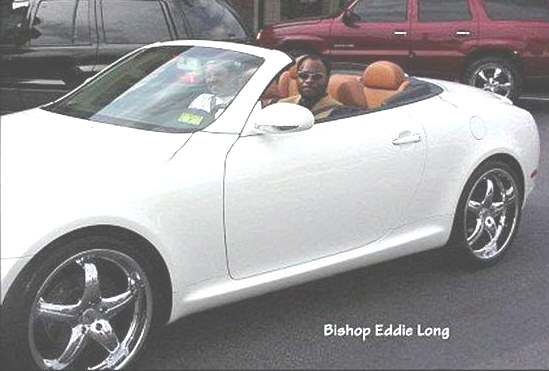
The "Masculine Journey" of Bishop Eddie Long


The "Masculine Journey" of Bishop Eddie Long
By Guy Mount

In an effort to establish his “potency” via the Word of God, Bishop Eddie Long once told his congregation that it was “the job of the preacher to bring fresh sperm.” For many observers this came as no surprise, as the bishop is widely known for asserting his masculinity through these kinds of sexually-charged analogies. In the same sermon the bishop denigrated lesser preachers calling them impotent “dead sperm” disseminators and glorified a God that begets “widespread [spiritual] pregnancies.” He has subsequently made blanket statements referring to homosexuality as a form of “spiritual abortion.”

While the merging of the sacred and the profane is a centuries-old practice among African Americans, these statements have taken on an entirely new meaning in light of the current allegations made by four male church members against the bishop. The four men, in their civil lawsuits, claim that the Bishop Eddie Long induced them with lavish gifts and romantic trips in return for sexual favors and manly fellowship. The complaints essentially describe an all-male harem operating within the Bishop’s New Birth Missionary Baptist Church. Promising a “Longfellows Masculine Journey,” this now suspiciously titled “Longfellows Academy” was a youth ministry program that found the bishop allegedly ‘initiating’ young boys like a Greek aristocrat while performing elaborate cult-like marriage ceremonies between himself and his “Spiritual Sons.”

Inadvertently, the bishop may have in fact introduced some “fresh sperm” into a decades-old process that has been quietly reshaping black religious life in America. Although this particular germination was clearly not what the bishop had in mind, his case has dramatically brought issues of gender and sexuality to the center of the discussion taking place around black religious reform and spiritual leadership. While the final impact of the bishop’s plight is still unknown, it seems clear that his case will mark a significant turning point in African American religious history, especially as it relates to black sexuality and masculinity. It may also open up a much wider discussion about black religious belief in general and its intersection with contemporary cultural politics. As Syracuse University Professor Boyce Watkins wrote in a recent article for Black Voices, these allegations have the potential to “change the black church forever.”

The Performance of Religious Manhood

In the bishop’s defense, he really did do everything in his power to keep the lie alive. The extreme effort that the bishop exerted in order to demonstrate that he might single-handedly hold the cipher of black manhood was remarkable to the point of comical. His dogmatic performances continue to this day, as unlike other preachers whose private sex lives have been exposed, the bishop has decided to take the most unheard of (and masculine) of all positions; he’s fighting the charges. The elaborate pageantry was on full display in the bishop’s first public address regarding the allegations and was held on Sunday morning after the allegations broke in front of his New Birth “family.”

Beaming with charm and confidence the bishop started off by bending the truth. He told his congregation that he had waited to address the world until this moment because “[m]y first responsibility was to my family. Then my next responsibility is not to address the world before I address my family at New Birth.” This met with great applause from his congregation despite the fact that earlier in the week the bishop’s attorney appeared on the Tom Joyner show in the bishop’s steed, saying that that the bishop’s true desire was to address the world and the media first but that he, as his attorney, had to talk the bishop out of it. Where the bishop’s true desire really lies we may never know. What we do know is that the bishop vowed to fight the charges while pitting himself as David against Goliath. Continuing the analogy the bishop threatened all those who might doubt him, saying “I’ve got five rocks and I haven’t thrown one yet.” The bishop did however throw down his mic, snatched his wife, and left the stage leaving us all to wonder what he has in store for the world. Throughout the sermon Long admitted that he was not “a perfect man” and refused to deny that he had sex with other imperfect men. Although he said: “this thing, I’m gonna fight” we don’t yet know if “this thing” is a sexual orientation that he will later admit to and attempt to exorcise.

Not surprisingly, the performance met with overwhelming approval from the majority of Long’s supporters. Gabrielle A. Richards, a New Birth church member, told CNN that she “was so proud of him the way that he came out with his head high up and with his fabulous wife and he showed the strength that I’m accustomed to. And this is the Bishop Long that I know.” The bishop’s confidence and “fabulous” yet silent wife meant for Ms. Richards that their might still be hope that the nuclear black family rooted in heterosexual patriarchy might weather the storm. Ultimately it was the notion that nothing had changed which proved so comforting to her as “Bishop Long did a great job assuring us that he’s still Bishop Long.” Of course the implication was that Bishop Long could not be Bishop Long if he turns out to be the gay Bishop Long.

Others had a different assessment. The Reverend Carlton Pearson, Senior Pastor of Christ Universal Temple which openly welcomes and accepts LGBT members, commented on CNN regarding the same sermon saying that “the people rejoiced Sunday because he didn’t admit to anything. They didn’t want him to.” Apparently Bishop Long is a man who knows what his flock can handle and what they want to hear. Rev. Person, who is one of the leading advocates of the Gospel of Inclusion, told the nation prophetically that “Bishop Eddie Long is just the tip of the iceberg.” Gospel music and the black church are overflowing with LGBT members, according to Rev. Person, and without them “we wouldn’t have a church.”

Read the Full Essay @ History News Network

***

Gary Mount is a teaching assistant at San Diego State University and a HNN intern.

Barbershop Health Outreach on 'Our World' with Marc Lamont Hill


Marc Lamont Hill - Our World with Black Enterprise - Black Barbershop Health Outreach Foundation