Thursday, December 16, 2010

Murder Music: On Jamaican Dancehall and Homophbia


Jamaica’s dancehall music is being blamed for the country’s violent attacks on gays. But there are many who don’t see the music as homophobic, only the battle cry of a changing nation.

Murder Music
by Ilan Greenberg

On a breezy evening in mid-April a committee boasting some of Jamaica’s most venerable citizens convened an open-air meeting under the auspices of the department of government at the University of the West Indies. After almost a year and a half of sifting through charts and listening to old vinyl recordings, the committee co-chairmen, which included the president of Jamaica’s National Gallery and a former finance minister, presented to several hundred members of the public their list of the top one hundred Jamaican songs. Pandemonium ensued.

Audience members objected to the choice for number one song, “One Love,” Bob Marley’s sweet paean to togetherness, as being too saccharine. People jammed the open microphone to point out the under-representation of female artists. Others testily questioned why so few of the chosen top songs reflected reggae’s subversive, anti-establishment politics. Several people demanded a more transparent process. But the most passionate complaint from the crowd—which included members of the media, faculty in the university’s department of reggae studies, music industry figures, and ordinary music fans—was voiced over and over again from younger members of the audience: Where on this top one hundred list were the dancehall songs?

Dancehall is a beat-heavy, lyrically-dense, energetic, and synthesizer-driven music that has much in common with American hip-hop. It evolved in the early nineteen nineties out of the classic reggae of Bob Marley and Jimmy Cliff—the often feel-good, reefer-party music championing the Rastafarian visions of social justice and pan-African celebration, which had powered Jamaica to worldwide recognition in the nineteen seventies and had catapulted Jamaican musicians into the far reaches of global iconography.

Surging in popularity worldwide, dancehall acts routinely fill venues like Madison Square Garden. The biggest dancehall performers sell out their U.S. concert dates within minutes. In Japan some forty thousand fans roar to the beat of dancehall acts in a sold-out stadium concert staged every September. Dance moves pioneered by dancehall fans frequently turn up in the videos of American hip hop stars.

But dancehall is hugely controversial—inside and outside Jamaica. Detractors echo many of the same complaints voiced against American hip-hop, including that the music promotes misogyny and violence. But the brief against dancehall far exceeds criticism inveighed against any other genre of popular music. Dancehall is a crucible for Jamaica’s irreconcilable notions of class and masculinity and identity. Most of all, dancehall is accused of fomenting vicious anti-gay violence.

Read the Full Essay @ Guernica

GA Prison Inmate Strike Enters New Phase, Prisoners Demand Human Rights, Education, Wages For Work


GA Prison Inmate Strike Enters New Phase, Prisoners Demand Human Rights, Education, Wages For Work
by Bruce A. Dixon, audio interview by Glen Ford

The historic strike of Georgia prisoners, demanding wages for their labor, educational opportunities, adequate health care and nutrition, and better conditions is entering a new phase. Strikers remain firm in their demands for full human rights, though after several days many have emerged from their cells, if only to take hot showers and hot food. Many of these, however, are still refusing their involuntary and unpaid work assignments.

A group that includes relatives, friends and a broad range of supporters of the prisoners on the outside has emerged. They are seeking to sit down with Georgia correctional officials this week to discuss how some of the just demands of inmates can begin to be implemented. Initially, Georgia-based representatives of this coalition supporting the prisoner demands included the Georgia NAACP, the Nation of Islam, the National Association for Radical Prison Reform, the Green Party of Georgia, and the Ordinary Peoples Society among others. Civil rights attorneys, ministers, community organizations and other prisoner advocates are also joining the group which calls itself the Concerned Coalition to Protect Prisoner Rights.

Read More @ Black Agenda Report

Wednesday, December 15, 2010

Robert Townsend: The Future of Television, Importance of Social Justice, and Working With Committed Collaborators


Robert Townsend: The Future of Television, Importance of Social Justice, and Working With Committed Collaborators
by Aymar Jean Christian

AJC: What led you to the web?

Robert Townsend: A gentleman out of DC named Rey Ramsey. He approached me about creating content for the web. I was shooting a movie in Toronto and he said, ‘hey Robert, you’ve run a television network before, and online/broadband/web series are going to be the future, so would you be interested in creating web shows?’ I was like, ‘I don’t know much about it.’ He started to tell me more. And as he started to educate me more about what was really going on the future, I was like, ‘yea, let me try it.’ And the first web series he wanted to do was about single mothers, because they go through a lot and their stories are never really truly being told. And that became our first web series, Diary of a Single Mom. Then I called on friends in Hollywood, everybody that I thought would be right for the part, and everybody that I asked came aboard, like the legend Billy Dee Williams, Richard Roundtree, Leon, Monica, Diahann Carroll.

What is One Economy?

One Economy is a non-profit out of Washington, DC., and one of their missions is to get minorities online. Historically it’s been documented that minorities are the last to, you know, jump on board with technology. So Ray’s vision was to create a show that had a multi-ethnic cast, and give them quality programming – ‘spinach,’ stuff that would make their lives better.

Was it hard to shoot the series?

When you shoot something, it’s the same muscles and energy it would take to do a feature or a TV series. For the web, the only difference is we’re doing 12 to 14 minute episodes, but when you average it all together, we’re really shooting a small feature. It’s the same discipline, we’re using the same cameras that you’d use on any other production. We just had to figure out how you tell a really tight story in 12 minutes or 13 minutes.

What do you think works best about the show?

I think the production really just comes together on all levels. I think the acting is really fine. Cheryl [West] is an incredible writer. As a director, I just stay out of the way, because when you’ve got a good machine and a good team, we all work all together. We didn’t do it to win awards, we didn’t even know there were awards out there for web shows. We were just trying to create the best series we could and all of a sudden we’re nominated! So I think for us the spirit in which Ray envisioned the series is what it is. And I think people respond because it’s authentic. There’s a place where Cheryl writes from because she’s a single mother as well.

A lot of that authenticity seems to stem from Monica Calhoun. You want to root for her character, Ocean.

Oh my God, do you want to root for her! I’ve re-watched a lot of the episodes, and I just finished mixing season three. We’re supposed to be in there listening for sound problems, and we’re in there crying! Monica’s going through so much. You really feel like a voyeur going into this world because it feels very real. She’s at the heart of it. Ocean and Monica are at the heart of the show.

Read the Full Interview @ Televisual

Prisoner Advocate Elaine Brown on Georgia Prison Strike: “Repression Breeds Resistance”


from Democracy Now
w/Amy Goodman

Prisoner Advocate Elaine Brown on Georgia Prison Strike:
“Repression Breeds Resistance”

At least four prisons in Georgia remain in lockdown five days after prisoners went on strike in protest of poor living and working conditions. Using cell phones purchased from guards, the prisoners coordinated the nonviolent protests to stage the largest prison strike in U.S. history. There are reports of widespread violence and brutality by the guards against the prisoners on strike. We speak to longtime prison activist Elaine Brown of the newly formed group Concerned Coalition to Respect Prisoners’ Rights. [includes rush transcript]

Elaine Brown, Longtime prison activist and former chair of the Black Panther Party. Her books include The Condemnation of Little B: New Age Racism in America and A Taste of Power: A Black Woman’s Story.

Tuesday, December 14, 2010

All the Rock Gods are White, All the Soul Men are…well Black Men, but Some of Us Are Aretha Franklin


All the Rock Gods are White, All the Soul Men are…well Black Men,but Some of Us Are Aretha Franklin

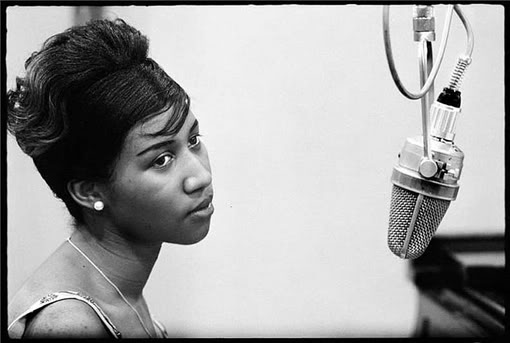
Roses for Aretha
by Mark Anthony Neal

“A Rose is Still a Rose,” released in 1998, was Aretha Franklin’s last major hit single. Produced by Lauryn Hill, who was poised to release the generation defining The Miseducation of Lauryn Hill later that year, the song represented a metaphoric passing of the torch—a torch that was also passed to Mary J. Blige, when Franklin appeared on the latter’s “Don’t Waste Your Time” from Blige’s Mary. Unspoken in both of these performances is that Franklin remains the most important Black Woman artist that the Unites States has ever produced and few among current fans of American popular music really have an appreciation of what that means.

In the annals of American Pop music, to paraphrase Barbara Smith, Gloria Hull and Patricia Bell Scott, “All the Rock Gods are White, All the Soul Men are…well Black Men, but Some of Us Are Aretha Franklin.” It is simply too easy to forget that Aretha Franklin was the first woman inducted into the Rock & Roll Hall of Fame in 1987. That Ms. Franklin wasn’t included among the 16 men who were inducted in the first class (The Everly Brothers, really?) in 1986 only illustrates the point that Ms. Franklin’s achievements are often taken for granted, even among so-called fans of Black music.

Though the term “Diva” existed well before Aretha Franklin walked across a stage, in many ways she is the ultimate embodiment of the term. More than simply a celebrated vocalist, at her commercial peak in the late 1960s, Ms. Franklin could have legitimately been called the most popular Black woman of the 20th Century. The 18 Grammy Awards, including eight straight years in the Best Female R&B/Soul category (1968-1975) tell only a part of the story.

Ms. Franklin’s stature existed well beyond the Pop charts that she dominated in the 1960s and 1970s as she is part of a handful of African-American artists responsible for mainstreaming Black spirituality at a time when the ethos of that spirituality was at the cutting edge of progressive politics in the United States.

Read the Full Essay @ theLoop21

Adam Mansbach Responds to Boston Globe Screed on Hip-Hop Studies


from the Boston Globe

Meet the Rap-ademics
The Ivy League offers its esteemed interpretation on the ‘virtue and complexity’ of hip-hop lyrics
by Alex Beam

***

special to NewBlackMan

Adam Mansbach Responds

Dear Alex,

I wonder what you hope to accomplish with a piece like "Meet the Rap-ademics." Why bother to write about the music or the culture at all, if you're going to approach it with petulance, mockery, and ignorance? None of these is anything new, when it comes to coverage of hip-hop – not the shots you take, not the over-generalizations, not the factual errors (two glaring ones: Gates was in no way the first "rap-ademic" by virtue of his 1990 testimony; Craig Werner was teaching a course on hip-hop at the University of Wisconsin at Madison as early as 1985. And you misquote the Jay-Z lyric; it's "rub," not "run." Even the Anthology gets this line right – this error is all yours.)

Sure, you can isolate two Jay-Z lines lacking in complexity and ambivalence, quote them, and make the entire conversation about his work look silly. But if you're serious about making a critique, why take a cheap shot? Why not do it honestly, by discussing a lyric that possesses these qualities? You've got the Anthology in front of you, presumably. Why not flip the page to,"All the teachers couldn't reach me and my mama couldn't beat me/hard enough to match the pain of my pops not seeing me/so with that disdain in my membrane/got on my pimp game/f*** the world my defense came."

You mock Grandmaster Caz's clarification of his lyrics, but the truth is that it's precisely this kind of locale-specific reference that made the music vital at the moment of its inception – made it relevant, the voice of New York City kids who had been marginalized because of where they lived. Your tone here is insulting, deliberately so, but it's more than that, and probably more than you realize. Caz's stories do matter – more so because they were created in the face of just the kind of condescension and dismissal you replicate here. I wonder: why, in 2010, are you so invested in belittling them?

"Finally the academy has caught up with and embraced hip-hop," you write, as if it just happened. In reality, hundreds of courses on hip-hop are taught at universities all over the country. Neither I nor anyone else is "fretting" about a "lacunae in the hip-hop canon;" quite the contrary, we're arguing that this field of study – established and recognized – has specific standards that we intend to see met. I can't help but wonder whether you'd recognize any of the titles that make up that canon, but I'd be happy to send you a copy of the syllabus for the hip-hop course I'll be teaching this spring at Rutgers University.

All that said, I doubt I'd be bothering to write this email if not for the statement with which you end your piece. How it's connected to the rest of the essay, I can't tell. But the argument that hip-hop is "keeping African-Americans down" through its "celebration of ignorance, gangsterism... and violence against women" is just the kind of sweeping generalization that has always plagued the worst hip-hop scholarship. First of all, how can one generalize about a sprawling, multi-billion dollar industry like hip-hop? For every artist who trades in such ideas (and certainly, there are many), there is another whose lyrical content is deeply well-informed, explicitly anti-gangster, and explicitly anti-violence.

It's easy, of course, to stereotype an entire kind of music (though no one seems interested in doing do with rock, which last time I checked also had its share of sexist and violent content). More productive would be to examine the market forces that push the kind of songs you're talking about into positions of mainstream prominence – and to acknowledge that those forces do not act solely on hip hop, but on mass culture at large. But it’s easier to pretend that violence and misogyny were somehow smuggled into the country through hip hop, as opposed to forces that act profoundly on us all.

Ultimately, blaming hip-hop for "keeping African-Americans down" is a tried and true method of obscuring structural racism: if it's hip-hop's fault, then nobody has to care, do they? Nobody has to question inherent biases in education, law enforcement, the judicial system – all areas that hip-hop artists, ironically enough, have been addressing for thirty years. You’ve gotta listen to hear that part, though.

***

Adam Mansbach's latest novel, The End of the Jews (Spiegel & Grau) won the California Book Award. Named a Best Book of 2008 by the San Francisco Chronicle. Mansbach’s previous novel, the bestselling Angry Black White Boy (Crown), is taught at more than sixty colleges, universities and high schools. A satire about race, whiteness and hip-hop, it was a San Francisco Chronicle Best Book of 2005, and the recipient of an Honorable Citation from the Gustavus Myers Outstanding Book Awards and a PEN/Faulkner Writers in the Schools grant.

Monday, December 13, 2010

'Left of Black': Episode #13 featuring Khalil Gibran Muhammad and Ben Carrington


Left of Black #13—December 13, 2010
w/Mark Anthony Neal

Left of Black Host and Duke University Professor Mark Anthony Neal is joined by Professor Khalil Gibran Muhammad, the next director of the Schomburg Center for Research in Black Culture in Harlem and Sociologist Ben Carrington, author of the just published Race, Sports and Politics: The Sporting Black Diaspora.

→Khalil Gibran Muhammad is Assistant Professor of History at Indiana University. He is the author of The Condemnation of Blackness: Race, Crime, and the Making of Modern Urban America (Harvard University Press) and will become the Director of the Schomburg Center for Research in Black Culture in July of 2011.

→Ben Carrington is Associate Professor of Sociology at the University of Texas at Austin where he teaches courses on the Sociology of Race, Sport and Popular Culture. He is the author of Race, Sports and Politics: The Sporting Black Diaspora (Sage Publishers).

***

Left of Black is a weekly Webcast hosted by Mark Anthony Neal and produced in collaboration with the John Hope Franklin Center at Duke University.